 6 min read


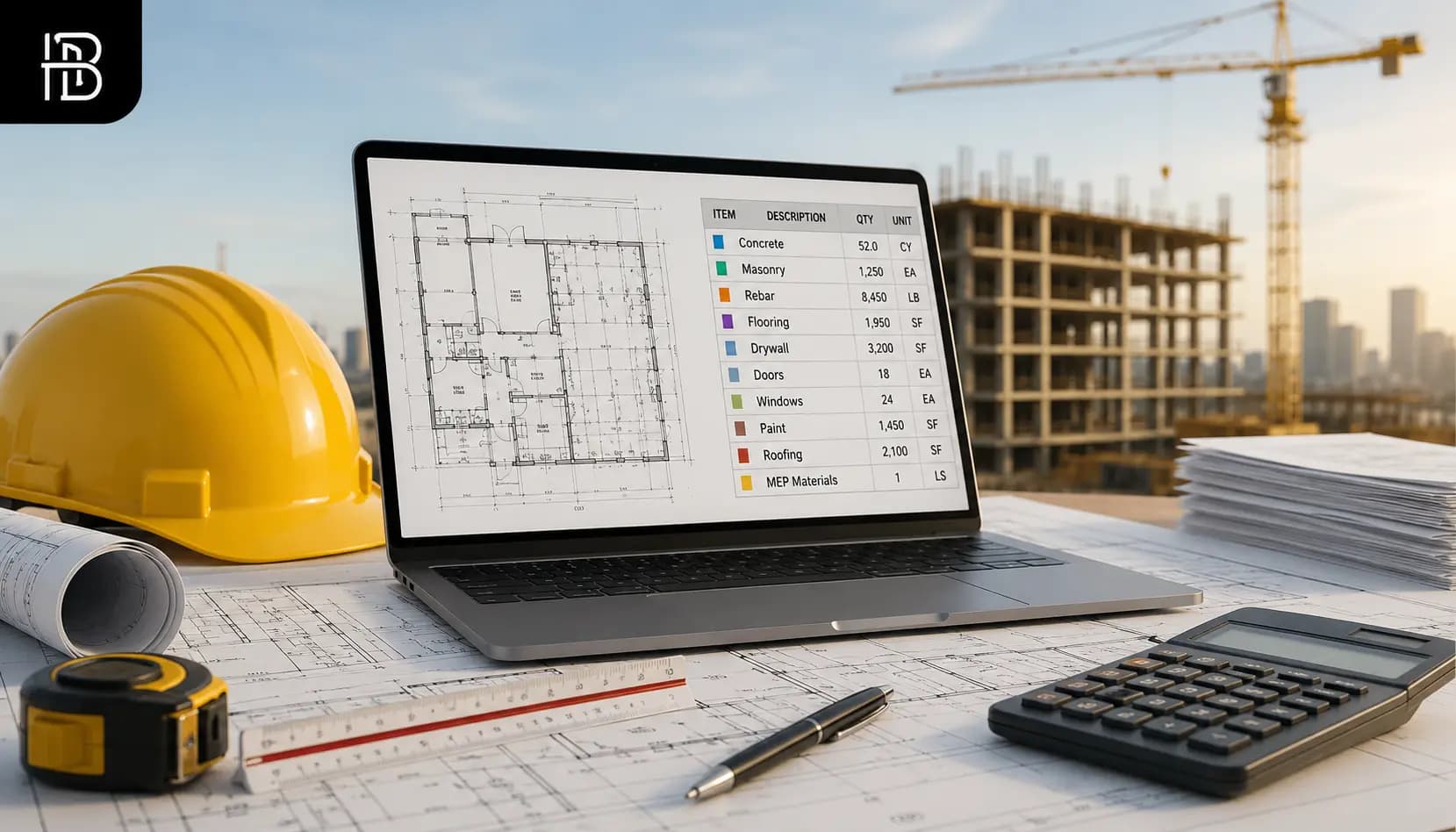

A quantity takeoff (QTO) is where every accurate construction estimate begins. Whether you're bidding on a residential remodel or a multi-million-dollar commercial project, your estimate is only as accurate as your takeoff. A missed quantity can lead to material shortages, budget overruns, or lost profits.
In this guide, you'll learn what a quantity takeoff is, why it matters, how professionals perform one, and the best practices to improve estimating accuracy.
What is a Quantity Takeoff ?
A quantity takeoff is the detailed measurement of all the materials, labor, and equipment a project requires, pulled directly from the plans, drawings, and specifications. It converts what’s drawn on paper into a structured list of quantities you can price, order, and schedule against.
Why the Quantity Takeoff Matters
Bidding: it’s the measured base your entire estimate is priced from.
Purchasing: it tells you exactly how much material to order, reducing waste and shortages.
Budgeting: it underpins a realistic project budget and cash-flow plan.
Risk: catching scope early prevents costly change orders and overruns.
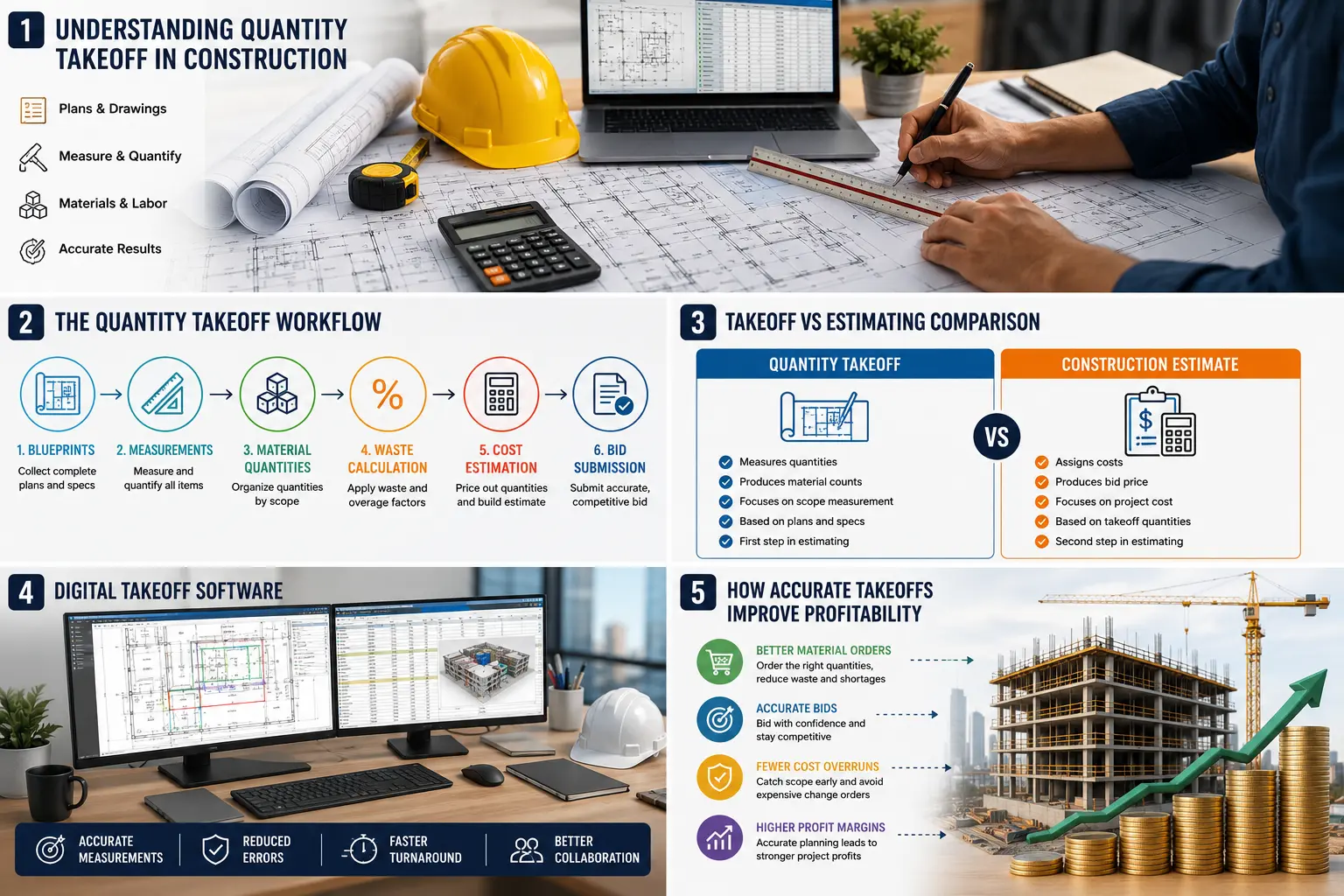
The Quantity Takeoff Process, Step by Step
1. Gather complete plans and specifications
Collect the full drawing set, specifications, and any addenda. Missing a single revised sheet is one of the most common sources of takeoff error.
2. Break the project into scopes
Organize the work by trade or by CSI MasterFormat division. Working scope by scope keeps you from double-counting or skipping an assembly.
3. Measure quantities
Count items, measure linear runs, calculate areas, and work out volumes. Keep your scale consistent and record each quantity in the correct unit as you go.
4. Apply waste and overage factors
Real material orders include waste. Add the appropriate factor for each material — for example, a small percentage for cut-off and breakage — so your quantities reflect what you’ll actually buy.
5. Organize into a quantity schedule
Compile everything into a clean schedule grouped by scope, with quantities and units. This becomes the hand-off document to your estimator or purchasing team.
6. Review and quality-check
A second set of eyes catches missed scope and unit errors. A simple review step is the cheapest insurance against a bad bid.
Units You'll Use
Count (EA): fixtures, doors, devices.
Linear (LF): pipe, conduit, trim, framing.
Area (SF / SY): flooring, drywall, paving.
Volume (CY): concrete, excavation, fill.
Weight (tons / lbs): structural steel and rebar.
Tips for Accurate Quantity Takeoffs
Verify the drawing scale before you measure anything. Color-code completed areas so nothing is counted twice or skipped. Don’t forget the small items fasteners, accessories, and connections add up. Cross-check quantities against the specifications, not just the drawings.
- Verify drawing scale
- Color-code completed areas
- Don't forget accessories
- Cross-check specifications

Common Quantity Takeoff Mistakes Contractors Make
Even experienced estimators can make errors during the takeoff process. Small mistakes often turn into major cost overruns once construction begins.
1: Using Outdated Drawings
Many projects go through multiple revisions before construction starts. Performing a takeoff from an outdated drawing set can lead to missing scope items and inaccurate material quantities.
2: Ignoring Specifications
Plans show dimensions and layouts, but specifications define materials, installation requirements, and performance standards. A complete quantity takeoff always references both.
3: Double Counting Materials
Without a structured workflow, estimators may accidentally count the same area twice, especially on large commercial projects.
4: Forgetting Waste Factors
Materials such as drywall, flooring, roofing, and framing require waste allowances. Ignoring waste percentages can lead to shortages and emergency purchases.
5: Missing Small Components
Fasteners, hangers, connectors, anchors, sealants, and accessories often represent thousands of dollars in project costs.
Types of Quantity Takeoffs
Different construction projects require different takeoff approaches.
1: Material Takeoff (MTO)
Focuses exclusively on materials such as concrete, steel, lumber, drywall, and finishes.
2: Labor Takeoff
Calculates labor hours required to complete each scope of work.
3: Equipment Takeoff
Determines machinery, tools, and equipment needed for project execution.
4: Digital Quantity Takeoff
Performed using software platforms that automate measurements and improve accuracy.
5: Trade-Specific Takeoffs
Specialized takeoffs for:
- Concrete
- Masonry
- Structural Steel
- Framing
- Drywall
- Electrical
- Plumbing
- HVAC
- Roofing
- Sitework
Best Quantity Takeoff Software for Contractors
Modern estimators rely on software to improve speed and accuracy.
1: Bluebeam Revu
Popular among general contractors for PDF-based takeoffs and collaboration.
2: PlanSwift
One of the most widely used takeoff platforms for residential and commercial construction.
3: On-Screen Takeoff (OST)
Designed for professional estimators handling large commercial projects.
4: STACK Construction Technologies
Cloud-based estimating platform with integrated takeoff functionality.
5: Autodesk Takeoff
Ideal for teams already working within the Autodesk ecosystem.
Benefits of digital takeoff software include:
- Faster measurements
- Reduced human error
- Better collaboration
- Audit trails
- Improved bid turnaround times
How Accurate Quantity Takeoffs Increase Profitability
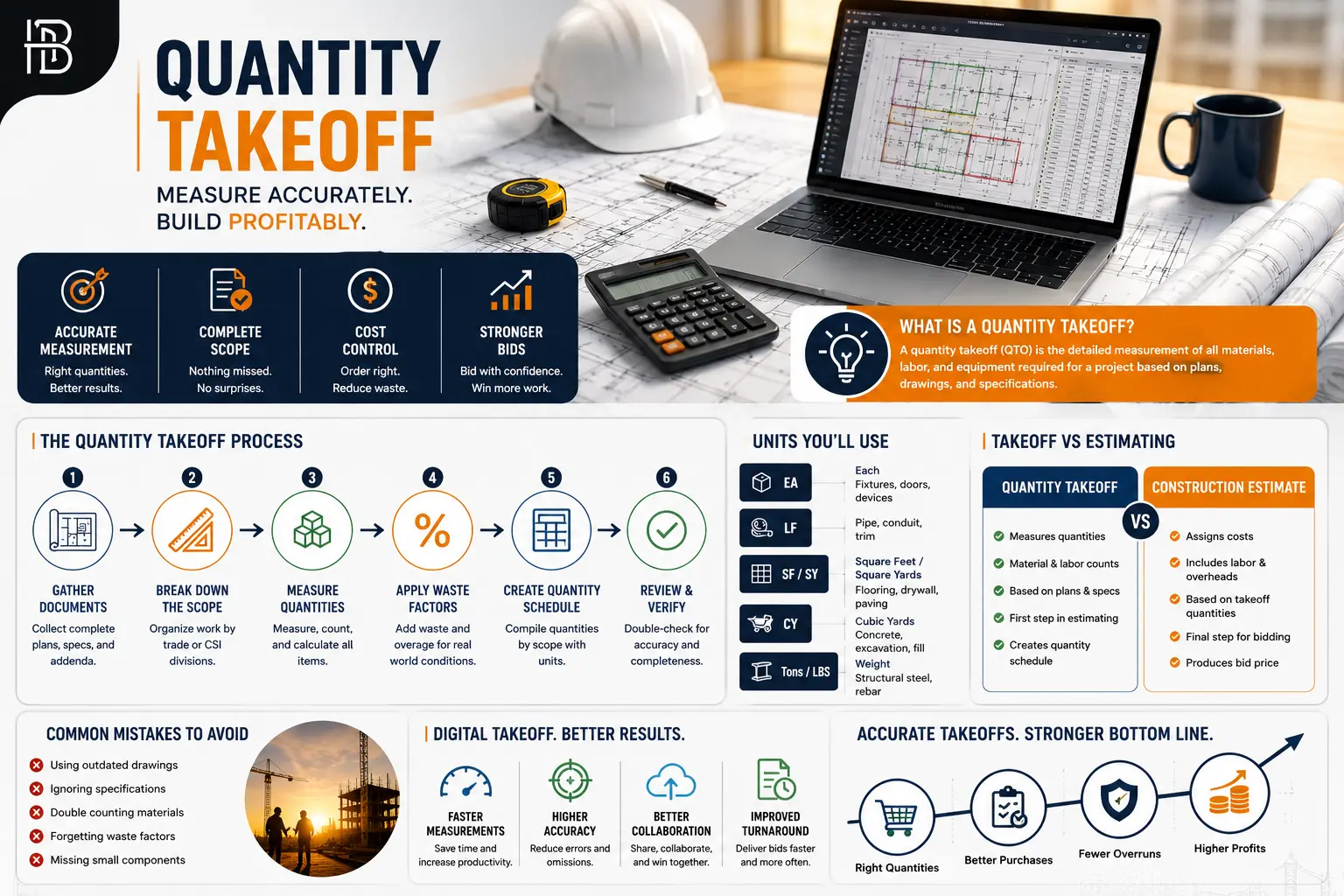
Accurate quantity takeoffs do more than improve bids—they directly affect profit margins.
1: Better Material Purchasing
Ordering the correct quantities reduces excess inventory and waste.
2: Stronger Bid Accuracy
Contractors can submit competitive bids without underpricing the work.
3: Reduced Change Orders
Early scope identification minimizes costly surprises during construction.
4: Improved Scheduling
Material and labor planning become easier when quantities are known upfront.
5: Increased Win Rate
Consistent estimating helps contractors bid confidently and win more projects.
When Should Contractors Outsource Quantity Takeoffs?
Many contractors outsource takeoff services when:
- Bid deadlines are tight
- Internal estimating teams are overloaded
- Specialized trade expertise is required
- Large commercial projects demand additional resources
- Consistency across multiple bids is needed
Outsourcing allows contractors to focus on project management, client relationships, and business development while maintaining accurate estimates.
Who Benefits From Quantity Takeoff Services?
This new section naturally targets additional keywords while helping potential customers identify themselves.
1: General Contractors
Submit more competitive bids with confidence by relying on accurate quantity measurements.
2: Subcontractors
Electrical, plumbing, HVAC, drywall, concrete, roofing, and framing contractors can reduce estimation errors and improve project planning.
3: Developers
Gain better cost visibility before construction begins, helping with budgeting and investment decisions.
4: Architects & Engineers
Verify project scope and material requirements during the design and pre-construction phases.
Final Thoughts
A quantity takeoff is the backbone of every successful construction estimate. Whether you're bidding a residential remodel or a multi-million-dollar commercial development, accurate quantities help control costs, reduce risk, improve purchasing decisions, and maximize profitability.
Contractors who invest time in accurate takeoffs—or partner with experienced estimating professionals—gain a significant competitive advantage in today's construction market.
Frequently asked questions
1: How long does a quantity takeoff take?
It depends on project size and complexity — from a few hours for a small scope to several days for a large commercial build. Professional estimators with software are significantly faster.
2: What’s included in a takeoff?
A structured list of all measured quantities by scope, in the correct units, ready for pricing.
3: Is a quantity takeoff the same as a material takeoff?
They overlap heavily. A material takeoff focuses on material quantities, while a quantity takeoff can also capture labor and equipment items.
4: Who should perform the takeoff?
A contractor or an estimator. Outsourcing keeps quantities consistent and frees your crew’s time.
5: How accurate should a quantity takeoff be?
Professional quantity takeoffs aim for the highest possible accuracy by reviewing plans, specifications, revisions, and waste factors. Using digital takeoff software further reduces human error.
6: Can quantity takeoffs be done from PDF drawings?
Yes. Modern estimating software allows contractors to measure directly from digital PDF plans, making the process faster and more accurate than manual methods.
7: What industries use quantity takeoffs?
Quantity takeoffs are widely used in residential construction, commercial buildings, industrial facilities, civil infrastructure, healthcare, education, and government projects.