 10 min read



What Is the Construction Estimating Process?
The construction estimating process is the systematic method contractors, estimators, and construction professionals use to calculate the total expected cost of completing a construction project before work begins. It involves evaluating every direct and indirect expense associated with the project to create an accurate estimate that serves as the foundation for budgeting and bidding.
Rather than relying on rough calculations or historical averages alone, professional estimators break a project into individual cost components and analyze each one separately. This structured approach helps ensure that nothing important is overlooked.
A complete construction estimate typically includes:
- Material quantities and pricing
- Labor hours and wage rates
- Equipment and machinery costs
- Subcontractor quotations
- Temporary facilities and site logistics
- General conditions and overhead
- Permits, insurance, and compliance costs
- Profit margin
- Contingency allowances for project risks
Each of these components contributes to the overall project cost, and together they form the basis of a reliable construction estimate.
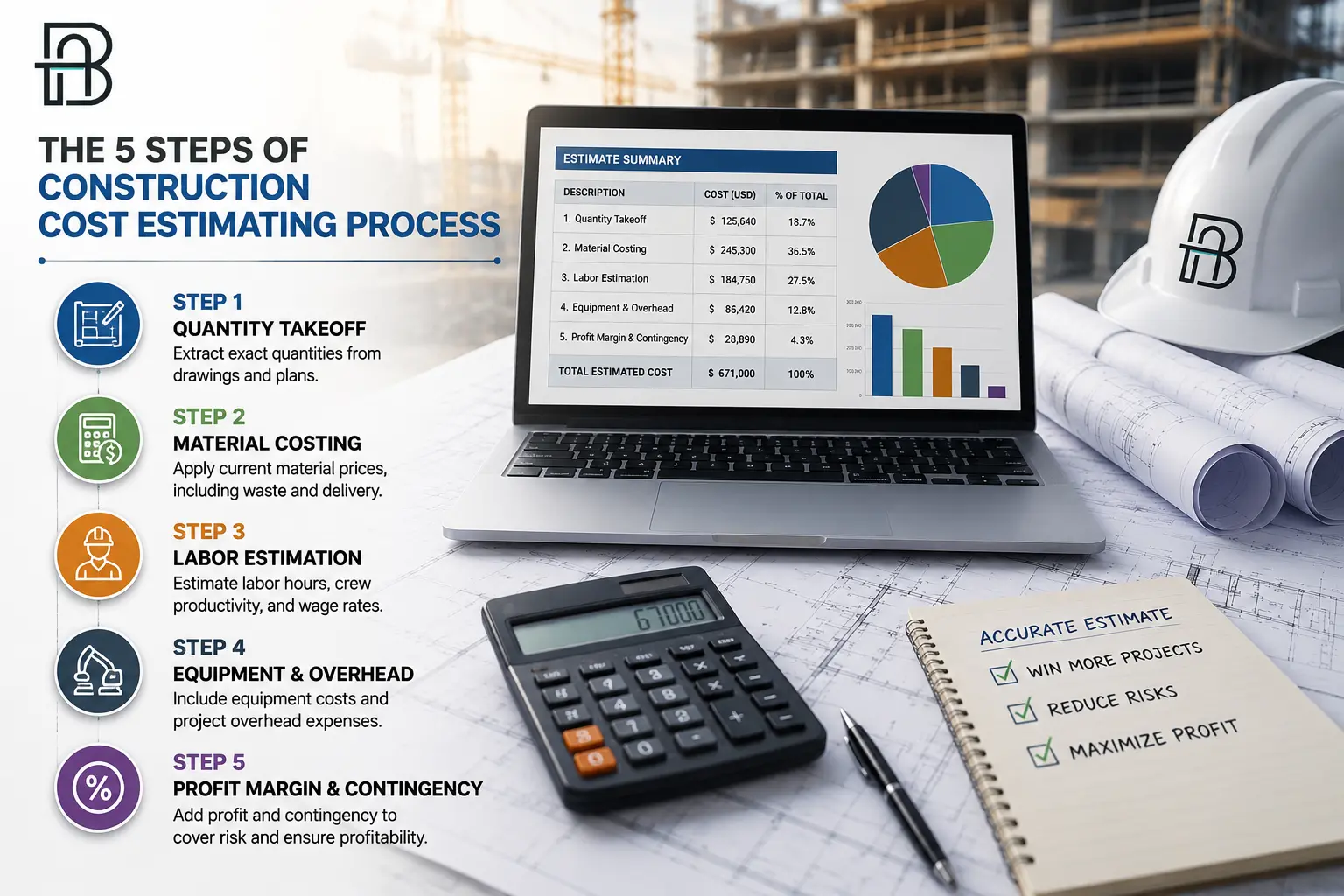
Step 1: Quantity Takeoff: The Foundation of Every Accurate Construction Estimate
Every successful construction estimating process begins with one critical task: quantity takeoff. Before costs can be assigned or bids can be prepared, estimators need to know exactly what materials, labor, and resources the project requires. This stage establishes the foundation for every calculation that follows, making it one of the most important parts of construction cost estimating.
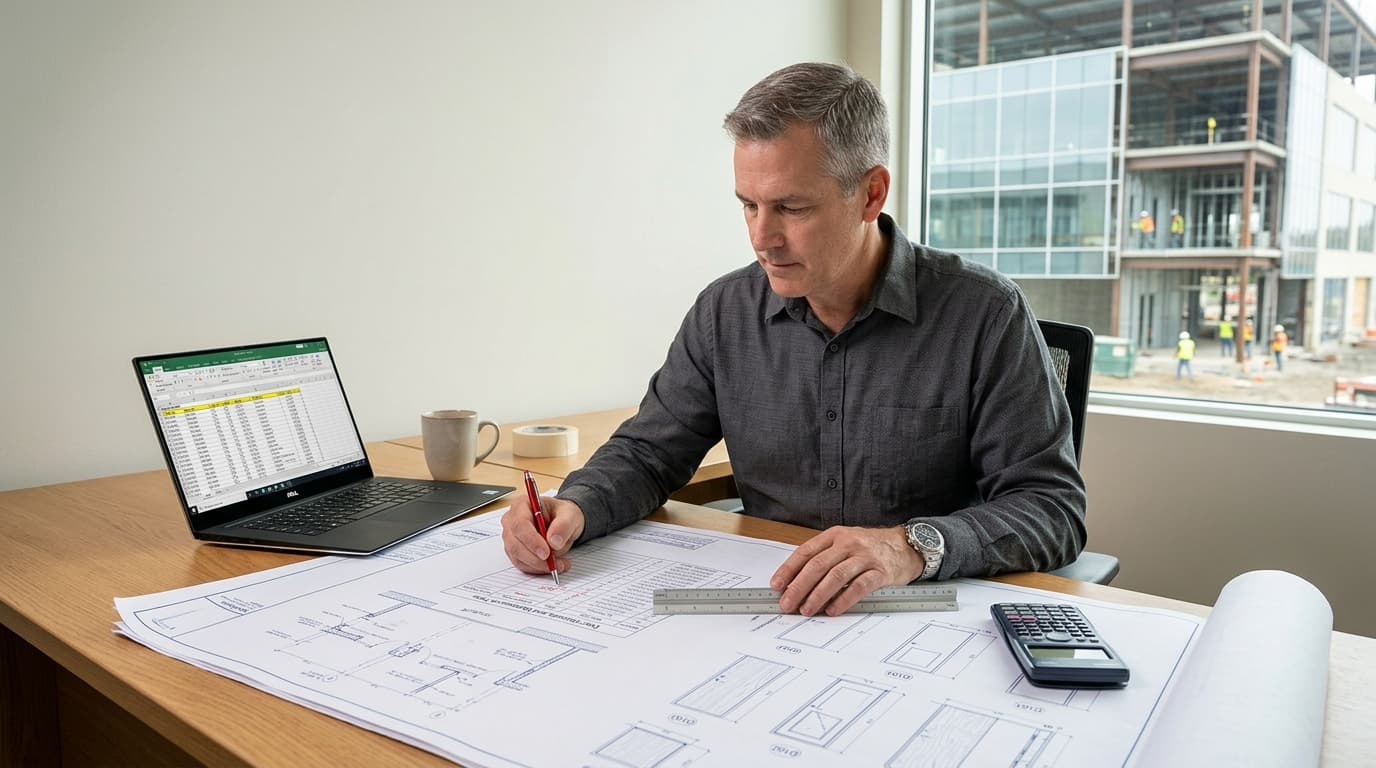
A quantity takeoff (often called a material takeoff or construction takeoff) is the process of measuring and listing every item needed to complete a project based on the architectural, structural, and engineering drawings. Rather than making assumptions, professional estimators carefully analyze the project plans to determine precise quantities for each construction element.
For example, a quantity takeoff may include:
- Concrete volume for foundations and slabs
- Steel reinforcement quantities
- Lumber requirements for framing
- Drywall square footage
- Roofing materials
- Flooring and tile quantities
- Doors and windows
- Paint coverage
- Mechanical, electrical, and plumbing components
- Excavation and earthwork volumes
Every quantity must be measured accurately because even a small error at this stage can multiply throughout the estimate. Missing a few cubic yards of concrete or underestimating steel requirements may result in thousands of dollars in unexpected costs during construction.
How Professional Estimators Perform Quantity Takeoffs
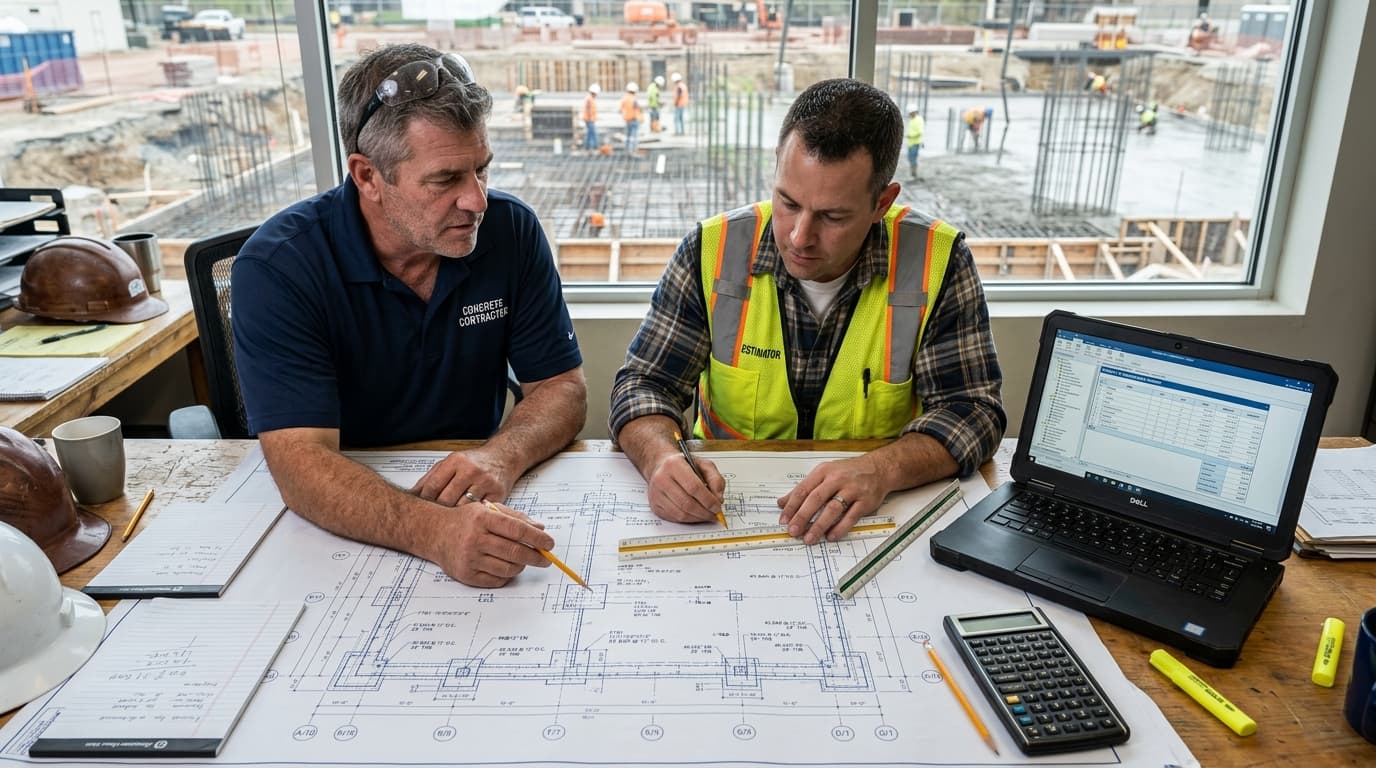
Modern estimators rely on a combination of experience, construction drawings, and specialized digital takeoff software to improve speed and accuracy. Instead of manually measuring every dimension with scale rulers, today's estimating professionals often use digital tools that calculate measurements directly from PDF drawings or BIM models.
Why Quantity Takeoff Is So Important
An accurate quantity takeoff provides numerous benefits throughout the construction project, including:
- Eliminates costly material shortages
- Reduces unnecessary material waste
- Improves purchasing accuracy
- Supports realistic project scheduling
- Increases confidence in the final bid
- Minimizes estimating errors
- Creates a reliable foundation for pricing
Because every later stage of the construction estimating process depends on these measurements, experienced estimators spend significant time verifying quantities before moving forward.
Step 2: Material Costing: Turning Quantities into Real Construction Costs
Once the quantity takeoff is complete, the next step in the construction estimating process is material costing. This phase transforms measured quantities into actual project costs by applying current market prices to every material required for construction.While the quantity takeoff tells you how much material is needed, material costing determines how much those materials will cost. Accurate pricing is essential because construction material prices fluctuate frequently due to supply chain conditions, seasonal demand, transportation costs, inflation, and regional market variations.
Professional estimators avoid relying on outdated price lists. Instead, they gather current pricing from trusted suppliers and manufacturers to ensure the estimate reflects real-world market conditions.
What Is Included in Material Costing?
A comprehensive material costing process considers much more than the purchase price of materials. Estimators evaluate every factor that could affect the total material expense, including:
- Current supplier pricing
- Bulk purchase discounts
- Freight and delivery charges
- Local taxes
- Material waste allowances
- Packaging and handling costs
- Storage requirements
- Material availability
- Lead times
- Potential price escalation during long-term projects
For example, if a project requires 10,000 square feet of drywall, an estimator won't simply multiply the quantity by the unit cost. They will also account for cutting waste, damaged materials, delivery fees, and any anticipated price increases before the project begins.
Why Material Prices Change So Often
Construction material costs rarely remain constant. Prices can rise or fall due to:
- Global supply chain disruptions
- Fuel price increases
- Manufacturing shortages
- Import tariffs
- Seasonal demand
- Natural disasters
- Economic inflation
These changes can significantly affect project budgets, especially on large commercial projects where material costs represent a substantial portion of the total estimate.
Step 3: Labor Estimation: Calculating the True Cost of Construction Work
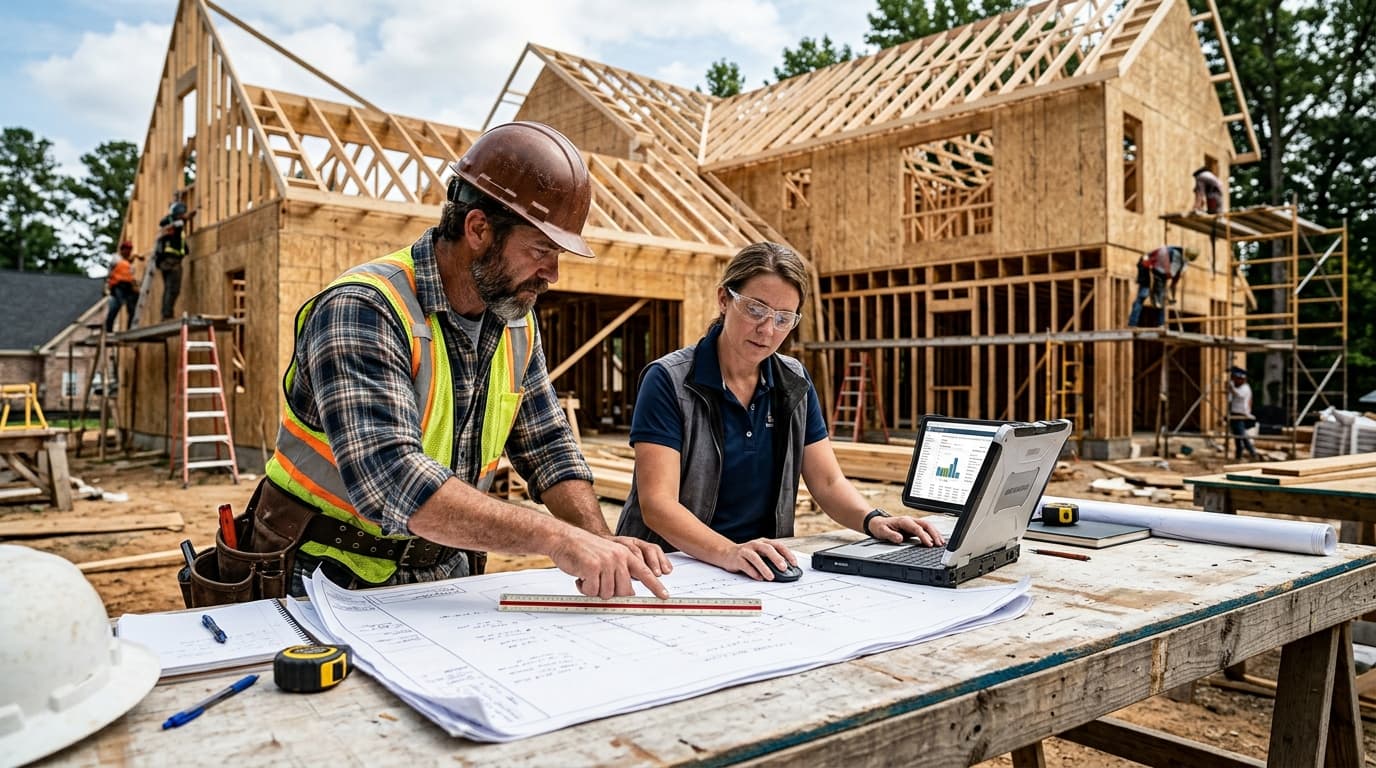
After materials have been quantified and priced, the next step in the construction estimating process is labor estimation. While material costs are relatively straightforward to calculate, labor is often the most complex and one of the largest cost components of any construction project.A professional labor estimate goes beyond assigning hourly wages. It evaluates how long each activity will take, how productive each crew is likely to be, and what factors may influence job-site performance.
For many construction projects, labor represents 30% to 50% of the total project cost, making accurate labor estimation essential for maintaining profitability.
What Does Labor Estimation Include?
Labor estimation determines the total workforce required to complete each stage of the project efficiently and within the planned schedule.
This includes calculating:
- Number of workers required
- Skilled and unskilled labor requirements
- Trade-specific labor hours
- Hourly wage rates
- Crew productivity
- Overtime costs
- Shift schedules
- Payroll taxes and benefits
- Workers' compensation
- Local labor regulations
Every trade is evaluated independently because different construction activities require different skill levels and productivity rates.
Step 4: Equipment & Overhead: Accounting for Every Cost Beyond Materials and Labor
By the time an estimator reaches this stage of the construction estimating process, the project already has detailed quantities, material costs, and labor estimates. However, an accurate estimate still isn't complete. There are numerous indirect expenses required to successfully execute a construction project, and overlooking them can significantly reduce profitability.
This is where equipment costs and project overhead come into play. While these costs may not be directly tied to a specific building component, they are essential for completing the project safely, efficiently, and on schedule. Professional estimators understand that successful construction projects rely not only on materials and skilled labor but also on the equipment, supervision, logistics, and operational support that keep the job moving forward.
What Are Equipment Costs?
Equipment costs include every machine, tool, and piece of construction equipment required to complete the project. Some contractors own their equipment, while others rent specialized machinery depending on the project size and duration.
Understanding Construction Overhead
Unlike direct costs such as concrete or framing lumber, overhead costs are expenses that support the project but cannot be assigned to a single construction activity. These expenses are essential for project execution and should always be included in the estimate.
why Contractors Often Underestimate Overhead
One of the most common estimating mistakes is focusing only on visible construction costs while overlooking the expenses required to manage the project.
Step 5: Profit Margin & Contingency: Protecting Profitability Without Sacrificing Competitiveness
Once all direct and indirect costs have been calculated, the final step in the construction estimating process is determining the appropriate profit margin and contingency allowance. This is where the estimate transitions from an internal cost calculation to a market-ready construction bid.
Many people mistakenly assume profit and contingency are the same. In reality, they serve two very different purposes.
- Profit is the financial return a contractor expects to earn for successfully completing the project.
- Contingency is a reserve for unforeseen conditions that cannot reasonably be predicted during estimating.
Including both ensures the contractor is prepared for uncertainty while maintaining a sustainable business.
Determining the Right Profit Margin
There is no universal profit percentage for construction projects. Profit margins depend on several variables, including:
- Project size
- Market competition
- Contract type
- Client relationship
- Risk level
- Project complexity
- Local market conditions
For highly competitive projects, contractors may accept lower margins to secure work. Conversely, specialized or high-risk projects often justify higher profit margins due to increased uncertainty and expertise.
Balancing Competitive Pricing with Sustainable Profit
One of the biggest mistakes contractors make is reducing profit simply to become the lowest bidder. Winning projects at unsustainable prices may increase revenue temporarily, but it often leads to:
- Cash flow problems
- Cost overruns
- Reduced quality
- Limited business growth
- Increased financial stress
Successful contractors understand that the goal isn't simply to win bids—it's to win profitable projects.
Why Contractors Outsource Estimating to BidAccurate
Preparing a detailed construction estimate requires time, specialized knowledge, and access to current pricing information. For many contractors, balancing estimating responsibilities with active project management can become overwhelming.
That's why more construction companies are choosing to outsource their estimating needs.
At BidAccurate, we help contractors, builders, subcontractors, developers, and construction firms prepare professional estimates that improve bid accuracy while saving valuable time.
Why Contractors Choose BidAccurate
1: Accurate Quantity Takeoffs
Our experienced estimators perform detailed quantity takeoffs using industry-leading digital estimating software, ensuring every measurable project component is accurately captured.
2: Up-to-Date Material Pricing
We use current supplier pricing and market data to create realistic construction estimates that reflect today's material costs.
3: Comprehensive Labor Analysis
Our estimates account for labor productivity, crew composition, regional wage rates, and project complexity to provide realistic labor budgets.
4: Detailed Equipment and Overhead Costing
We ensure indirect costs including equipment, supervision, permits, insurance, mobilization, and general conditions are fully incorporated into every estimate.
5: Faster Bid Turnaround
Need to meet a tight bid deadline?
Our estimating team helps contractors prepare professional estimates quickly, allowing them to pursue more bidding opportunities without sacrificing quality.
6: More Time to Focus on Construction
Instead of spending evenings reviewing plans and calculating quantities, contractors can focus on:
- Managing ongoing projects
- Building client relationships
- Growing their business
- Supervising field operations
We handle the numbers while you focus on building.
7: Estimates You Can Defend
Every estimate we prepare follows a structured methodology, making it easier to explain pricing to clients, justify costs during negotiations, and confidently submit competitive bids.
Whether you're working on residential homes, commercial buildings, industrial facilities, renovations, or specialty trade projects, BidAccurate provides reliable estimating support tailored to your scope of work.
Conclusion
An accurate construction estimate isn't created by chance, it's the result of following a disciplined and repeatable construction estimating process. From measuring quantities and pricing materials to estimating labor, accounting for equipment and overhead, and applying the right profit margin, every step plays a critical role in determining whether a project will be financially successful. Contractors who invest time in building accurate estimates are better positioned to:
- Submit competitive bids
- Protect profit margins
- Reduce financial risk
- Improve project planning
- Build stronger client relationships
- Win more profitable work
As projects become more complex and construction costs continue to fluctuate, accurate estimating has never been more important.
Frequently Asked Questions
1. What is the construction estimating process?
The construction estimating process is the systematic method of calculating the total expected cost of a construction project before work begins. It includes quantity takeoffs, material pricing, labor estimation, equipment costs, overhead, contingency, and profit to create an accurate and competitive construction bid.
2. Why is quantity takeoff important in construction estimating?
Quantity takeoff forms the foundation of every construction estimate. Accurate measurements ensure that materials, labor, and equipment are calculated correctly, reducing the risk of budget overruns and costly estimating mistakes.
3. How accurate should a construction estimate be?
A detailed estimate prepared from complete construction drawings should generally fall within 5–10% of the final project cost. Accuracy depends on project complexity, available information, and current market pricing.
4. What software is commonly used for construction estimating?
Many contractors use digital estimating tools to improve speed and accuracy. These platforms help perform quantity takeoffs, organize project costs, generate reports, and reduce manual calculation errors while streamlining the overall estimating process.
5. How can BidAccurate help with construction estimating?
BidAccurate provides professional construction estimating services, detailed quantity takeoffs, material and labor analysis, equipment costing, and comprehensive bid preparation for residential, commercial, and industrial projects. Our team helps contractors save time, improve estimating accuracy, submit competitive bids, and win more profitable work.