 4 min read



Whether you're a contractor, builder, developer, or homeowner, accurate project budgeting starts with reliable construction estimates. One of the most common questions asked before hiring an estimator is: "How much does construction estimating cost?"
The answer depends on several factors, including project size, complexity, trade discipline, and turnaround time.
In this guide, we'll explain how construction estimating costs are calculated in 2026, typical pricing models, and why investing in professional estimate cost services can actually save thousands of dollars during construction.
Why Construction Estimating Matters
Construction estimating is much more than calculating material quantities.
A professional estimate includes:
- Material quantities
- Labor calculations
- Equipment costs
- Subcontractor pricing
- Waste allowances
- Tax considerations
- Contingencies
- Profit margins
Accurate estimates help contractors:
- Submit competitive bids
- Reduce budget overruns
- Win more projects
- Improve profit margins
- Plan procurement effectively
Poor estimates often lead to underbidding, change orders, schedule delays, and unexpected financial losses.
How Much Does Construction Estimating Cost in 2026?
Construction estimating costs vary depending on the project's scope and complexity.
Residential Projects
Typical pricing ranges include:
- Small renovations: $100–$300
- Single-room additions: $250–$500
- Custom homes: $400–$1,200+
These estimates usually include quantity takeoffs, material costs, and labor estimates.
Commercial Projects
Commercial estimating generally costs more because of larger project scopes and multiple construction trades.
Typical pricing:
- Small commercial projects: $500–$1,000
- Medium commercial buildings: $1,000–$3,000
- Large developments: $3,000+
Complex projects involving mechanical, electrical, plumbing (MEP), steel, or concrete may require separate trade estimates.
Common Pricing Models
Construction estimating companies typically use one of the following pricing methods.
1. Flat Fee
The most common pricing structure.
The client pays one fixed price regardless of estimating hours.
Best for:
- Residential homes
- Small commercial projects
- Remodeling work
2. Price Per Square Foot
Some firms estimate based on building size.
For example:
- Residential
- Warehouses
- Office buildings
- Retail spaces
This approach works well when project complexity is relatively standard.
3. Hourly Pricing
Highly specialized estimating services often charge hourly.
Typical hourly rates:
$40–$150 per hour
Hourly billing is common for:
- Design revisions
- Value engineering
- Bid revisions
- Cost consulting
4. Trade-Specific Pricing
Many contractors only require estimates for a single trade.
Examples include:
- Concrete estimating
- Drywall estimating
- Roofing estimating
- HVAC estimating
- Electrical estimating
- Plumbing estimating
Pricing depends on trade complexity and drawing size.
What Affects Construction Estimating Cost?
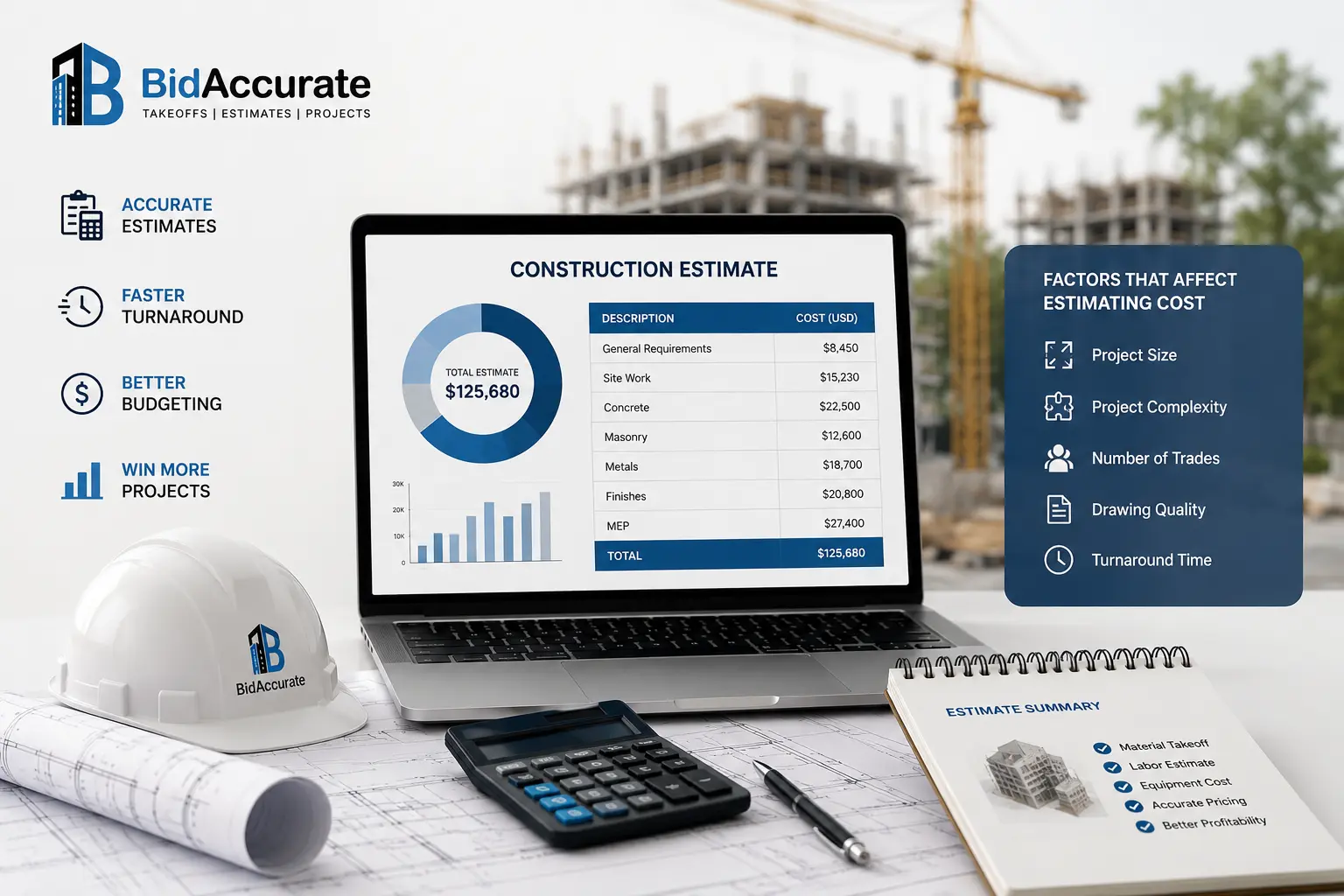
Several factors influence estimate pricing.
Project Size
Larger buildings naturally require more detailed quantity takeoffs and calculations.
A warehouse estimate may require significantly more work than a residential kitchen renovation.
Project Complexity
High-rise buildings, hospitals, manufacturing facilities, and mixed-use developments require substantially more estimating effort than standard residential homes.
Complex architectural details also increase estimating time.
Number of Trades
Estimating a single concrete package is much less expensive than estimating an entire building covering:
- Sitework
- Concrete
- Masonry
- Structural steel
- Carpentry
- Finishes
- Mechanical
- Electrical
- Plumbing
Each trade adds additional work.
Drawing Quality
Well-prepared architectural plans reduce estimating time.
Incomplete drawings often require assumptions and additional review, increasing costs.
Turnaround Time
Rush estimates typically cost more. A project needed within 24–48 hours often requires overtime resources and priority scheduling.
Is Hiring Professional Estimate Cost Services Worth It?
Absolutely, Although some contractors prefer preparing estimates internally, professional estimating services provide several advantages.
Better Accuracy
Professional estimators use specialized software and years of industry experience.
This significantly reduces costly mistakes.
Faster Bid Submission
Outsourcing estimates allows contractors to focus on:
- Site visits
- Client meetings
- Project management
- Business development
Instead of spending days preparing takeoffs.
Win More Projects
Accurate and competitive estimates improve bidding confidence.
Many contractors increase their bid volume after outsourcing estimating work.
Save Money
Even if an estimate costs several hundred dollars, avoiding one underpriced project can save tens of thousands of dollars. Professional estimates are an investment rather than an expense.
Should You Choose the Cheapest Estimating Service?
Not always, The lowest-priced estimate may:
- Miss quantities
- Ignore labor costs
- Contain calculation errors
- Use outdated pricing
- Delay project schedules
Instead, consider:
- Experience
- Accuracy
- Turnaround time
- Industry specialization
- Customer reviews
- Communication
Reliable estimating services deliver better long-term value than simply choosing the lowest price.
How BidAccurate Helps
At BidAccurate, we provide accurate and reliable construction estimating services for residential and commercial projects across the United States.
Our services include:
- Quantity takeoffs
- Material estimates
- Labor cost estimates
- Bid preparation support
- Residential estimating
- Commercial estimating
- Trade-specific estimates
Whether you're bidding on a single-family home or a large commercial development, our experienced estimators help you prepare competitive bids with confidence.
Conclusion
Construction estimating costs in 2026 depend on project size, complexity, trade requirements, and turnaround time. While prices vary, investing in professional estimate cost services often pays for itself through improved accuracy, better budgeting, and stronger bid performance.
Choosing an experienced estimating partner ensures your project starts with reliable numbers, helping you control costs and make informed decisions from planning through completion. Whether you're a general contractor, subcontractor, developer, or homeowner, accurate estimates remain one of the most valuable investments in any successful construction project.
Frequently Asked Questions
1: How much does residential construction estimating cost?
Residential estimating generally ranges from $100 to $1,200, depending on project size and complexity.
2: How much do commercial estimating services cost?
Commercial estimates typically range from $500 to several thousand dollars, depending on project scope and the number of construction trades involved.
3: Are quantity takeoffs included?
Many estimating companies include quantity takeoffs as part of the complete estimate, while others offer them as a separate service.
Is outsourcing estimating worth it?
Yes. Outsourcing can improve estimate accuracy, reduce workload, increase bid capacity, and help contractors win more profitable projects.