
 11 min read





Key Takeaways
- Define the mechanical bid package from the actual scope documents before reviewing quantities.
- Organize equipment, piping, air distribution, controls, and insulation by system and location.
- Record who supplies, installs, connects, tests, and documents each shared item.
- Compare vendor exclusions and field costs alongside equipment prices.
- Check addenda, alternates, commissioning support, and closeout before approving the final bid.
Your piping and sheet-metal totals look complete, but the controls quote excludes valve installation. The equipment supplier includes startup for one visit, while the project requires support across several phases. A clean quantity workbook can still leave those costs uncovered.
Before bid day, review how the mechanical packages fit together. You need to see both the measured work and the responsibilities around it. That includes supplier inclusions, temporary services, installation conditions, testing, and the documents needed to finish the job.
Use the following checklist with the current project set and your assigned scope. For a detailed check of air-side components, the separate HVAC takeoff checklist covers ductwork, equipment, piping connections, controls, and insulation.
What belongs in a mechanical takeoff?
The term mechanical can describe different packages. One contractor may carry heating and cooling only. Another may bid a combined package that includes plumbing, central plant, hydronic distribution, specialty piping, and associated controls. The bid invitation, specifications, drawings, and responsibility assignments establish what yours includes.
Begin with a written scope summary. Identify the buildings, floors, systems, demolition areas, and alternates you are pricing. List any equipment supplied by the owner or another contractor. Confirm whether the deliverable is quantities only, a material package, or a complete installed estimate.
Keep a short list of exclusions and unresolved questions beside the summary. If the drawings show process piping but the invitation names only HVAC, ask for clarification. A drawing discipline or specification division alone does not settle a disputed trade boundary.
1. Confirm the document basis and bid requirements
Check the document register before opening the quantity totals. Match plan dates, equipment schedules, specifications, and addenda to the files used for the takeoff. Review relevant architectural, structural, plumbing, electrical, and controls documents where they affect the mechanical scope.
Read the bid form early. Separate base work from additive or deductive alternates, allowances, unit prices, and requested breakdowns. An estimate that combines all work into one total can be difficult to transfer to a bid form without omissions or duplicate costs.
Record the deadline for supplier quotations and the time your team needs for final review. Decide how late changes will be handled. A vendor revision received minutes before submission should identify what changed so the estimator can update the affected lines without replacing an already checked package blindly.
Keep revision changes connected to the systems they affect
A replacement pump may change more than the equipment price. Review its connections, controls, electrical interfaces, support requirements, insulation, and startup coverage. Check linked drawings and specifications before closing the revision.
Retain the previous quantity and price basis in your change log. Note which quote version supports the new number and whether clarification remains pending. That record helps the next reviewer understand why the total moved.
2. Reconcile systems, schedules, and measured quantities
Divide the takeoff into systems such as chilled water, heating water, steam, supply air, return air, and exhaust where they appear in your contract. Within each system, keep the relevant size, material, joining method, and location visible.
Trace a few complete routes from the source equipment to the served equipment or terminal. Review plans, risers, flow diagrams, sections, and details together. This check can expose missing vertical runs or a connection assembly that was not clear on the floor plan.
Match equipment tags between schedules and plans. Record repeated references to the same unit so they are not counted as separate equipment. Where two documents disagree, log the conflict and the estimate's stated basis while you seek an answer.
| Package | Quantity review | Coordination review |
|---|---|---|
| Equipment | Tag, count, scheduled configuration, and location | Factory inclusions, field accessories, access, and startup |
| Piping | Service, diameter, material, fittings, and specialties | Connections, testing, cleaning, supports, and insulation boundaries |
| Air distribution | Duct basis, fittings, devices, dampers, and supports | Access, controls interfaces, penetrations, and balancing scope |
| Specialty packages | Controls devices, insulation quantities, and assigned activities | Supply, installation, integration, testing, and documentation |
Keep purchase quantities distinct from installation quantities when the basis differs. A supplier may price standard lengths or complete assemblies while your labor sheet uses measured runs and individual fittings. Explain that conversion so reviewers can compare the numbers.
3. Build a responsibility matrix for shared work
Use a simple matrix to identify who supplies, installs, connects, tests, and documents shared items. Add the source of each assignment, such as a scope sheet, specification paragraph, drawing note, or written clarification.
Review control valves and actuators, low-voltage wiring, power connections, firestopping, access panels, equipment pads, sleeves, drains, and temporary services where applicable. These items often involve more than one trade. A note saying "by others" needs a named responsible package before you can rely on it.
For a control valve, the controls supplier might furnish the valve and actuator while the piping contractor installs the valve body. Another package may carry wiring and integration. That is an illustrative split, not a standard assignment. Enter the actual project's responsibilities and check that the associated cost appears once.
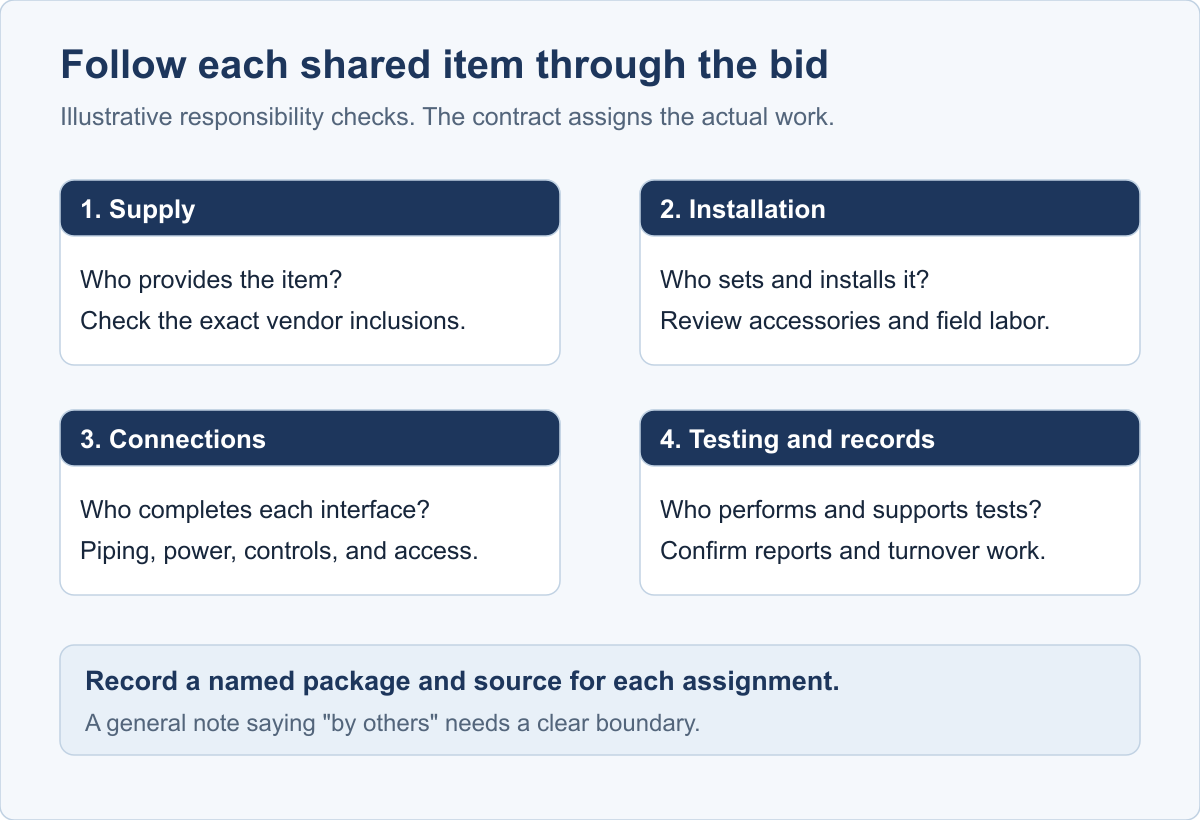
The Whole Building Design Guide's commissioning roles guidance describes a team with defined responsibilities across project phases. For estimating, use the project's own assignments to identify the attendance and deliverables your price must support.
4. Level supplier and subcontractor quotations
Compare each quote with the same schedule and scope version. Confirm the exact equipment selection, accessories, quantities, freight, lead time, validity period, and exclusions. Keep proposed substitutions visible until the required project review accepts them.
Read the exclusions before transferring the total. Curbs, isolation, connection kits, special coatings, factory controls, disconnects, delivery, unloading, and startup may be included differently between vendors. The list depends on the specified product and supplier package.
Use a quote comparison sheet with separate columns for requested scope, offered scope, exceptions, and the cost adjustment supported by an actual quote or stated estimate basis. Keep the original supplier total and record the reason for each adjustment beside it.
Separate supplier startup from contractor attendance
Ask what the startup service includes: required preparation, number of visits, timing, travel conditions, reporting, and return visits. Confirm who provides the labor and access needed for the vendor to complete the work.
A startup visit does not automatically cover all project testing or commissioning support. Read the specified activities and the supplier's offer together. Carry separately assigned labor and attendance where the quote leaves them with your team.
5. Review installation labor, access, and logistics
Check the labor basis against the site and sequence. Separate shop fabrication, field installation, supervision, and specialty subcontract work where useful. Confirm what the labor units already include before adding handling or accessory labor again.
Review ceiling heights, congested rooms, occupied areas, phased access, shutdown restrictions, and work outside normal hours. These conditions can change how your crew reaches and installs the same measured quantity. State the assumed conditions instead of hiding them inside a general labor factor.
For major equipment, trace the delivery path from truck to final position. Check the agreed responsibilities for unloading, rigging, cranes, temporary openings, protection, and setting. If the location or route is unresolved, obtain the required information and record the pricing assumption.
Coordinate demolition and temporary service separately from new installation. Identify work around systems that remain in service, the proposed shutdown sequence, and any temporary heating or cooling assigned to the package. Confirm the applicable project procedures with the responsible team before treating an assumption as an approved plan.
6. Include testing, cleaning, and closeout activities
Review pressure testing, flushing, cleaning, treatment, testing and balancing, controls checks, training, and turnover documentation where specified. Identify who performs each activity and who provides support. Keep those activities distinct from simply counting the installed components.
ASHRAE's HVAC commissioning chapter describes verification and documentation, including operation and maintenance information and training. Check who provides the specified support and deliverables, and where those costs appear in the estimate.
Check whether phased turnover creates repeated mobilizations, separate reports, or later testing. Include the activities actually assigned by the documents and identify unresolved requirements. Do not assume every project uses the same test frequency, acceptance criteria, or contractor attendance.
A worked review of one pump package
Consider an illustrative bid with two scheduled pumps. Your takeoff counts both pumps and their connected piping. The vendor quote covers the units and stated factory accessories, but excludes field isolation valves, electrical connections, and contractor startup attendance.
Start by matching the two tags and configurations with the schedule. Then review the piping details for each required valve, strainer, fitting, support, and instrument connection. Check which accessories are already supplied with the units before adding them to a separate material list.
Next, enter each shared activity in the responsibility matrix. Confirm who carries power, controls, rigging, testing, and startup support. If the quote includes one vendor visit for both pumps, retain that inclusion while checking whether the project sequence requires additional service.
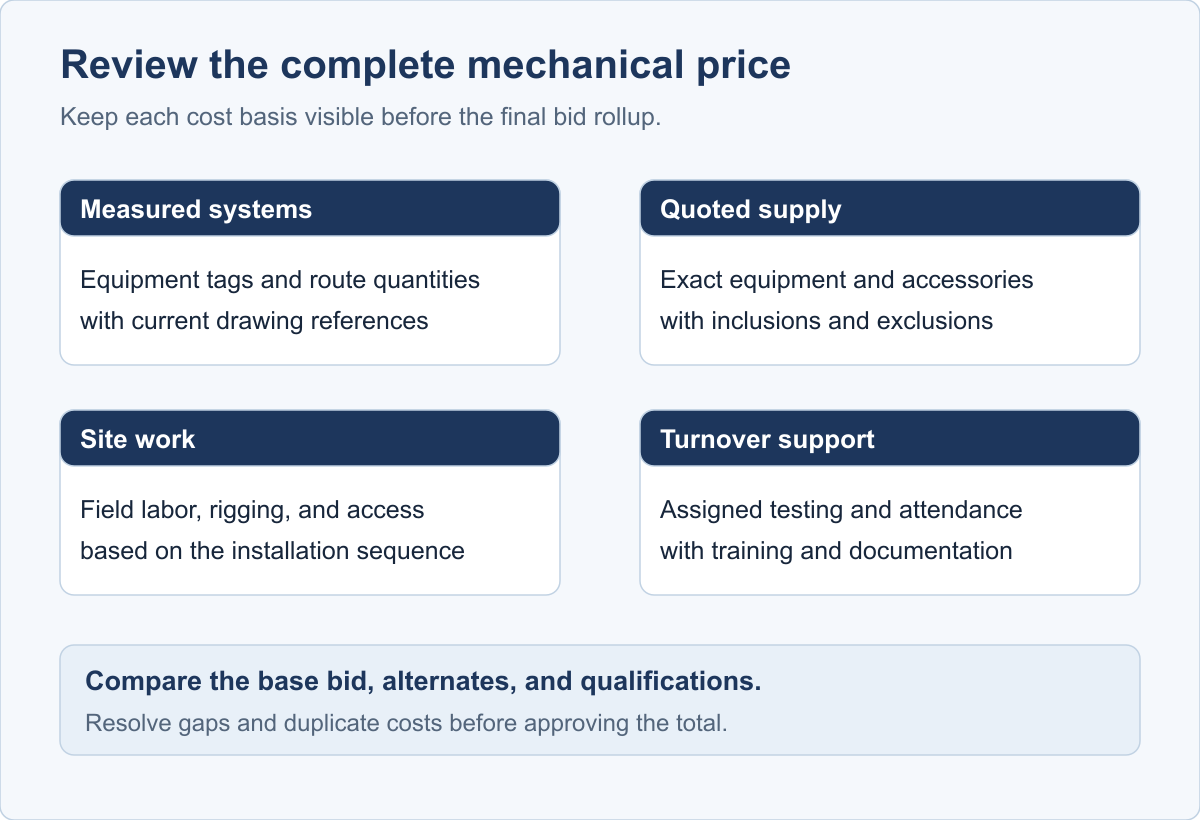
Finally, reconcile the cost groups: two equipment units, the measured connection assemblies, assigned installation labor, applicable logistics, and required testing or turnover support. The quantities and responsibilities determine the estimate; there is no universal percentage that fills every gap in a pump package.
What should the final bid review contain?
Ask a reviewer to trace selected high-value and easily missed lines back to their sources. Include one equipment group, one distribution route, and one shared responsibility. This gives the reviewer concrete evidence of how the estimate was assembled.
Check that the base bid, alternates, allowances, and exclusions match the requested form. Review material pricing, labor extensions, equipment charges, taxes, indirect costs, and markup using the agreed basis. Recheck formulas after importing late quotes or changing quantities.
Record unresolved issues with their assumed basis, potential scope effect, and the person following up. Where the bid instructions permit qualifications, make them clear and specific. Do not assume that writing an exclusion overrides the invitation's requirements.
If you start with a quantities-only deliverable, use the guide to pricing a quantity takeoff to check the remaining cost inputs before submission.
Conclusion
A mechanical bid review should connect the measured systems to the supplier offers and the work your team must complete on site. Keep responsibilities and exceptions beside the affected quantities, then check installation, testing, and closeout before approving the total.
BidAccurate's mechanical estimating services can help organize a combined package by system, equipment tag, and trade boundary. Share the current drawings, specifications, addenda, bid form, and available quotes so the review follows your assigned scope.
Frequently Asked Questions
How is a mechanical takeoff different from an HVAC takeoff?
HVAC focuses on the heating, ventilation, and air-conditioning work in the assignment. A mechanical package may combine HVAC with plumbing, central plant, or other piping systems. Confirm the actual contract scope before deciding what the takeoff must include.
Does a mechanical takeoff include labor?
A quantities-only takeoff does not establish a complete labor cost. Confirm whether your deliverable includes shop and field labor, specialty services, equipment, and indirect costs, or whether your estimator will add them.
Who should carry controls and electrical connections?
Use the project documents and agreed responsibility assignments. Separate supply, installation, wiring, integration, and testing so the work is covered once. A broad label such as "controls by others" needs a clear package boundary.
Should startup and commissioning support be priced separately?
Check their actual inclusions and responsibilities. A vendor startup service may leave preparation, contractor attendance, testing support, or later visits outside its offer. Carry those assigned activities visibly in the estimate.
How should addenda be checked?
Record the changed documents and trace their effect through connected systems, supplier quotes, labor, and responsibilities. Retain the earlier basis and identify unresolved questions so the final reviewer can follow the revision.
Can I use one allowance for all missing mechanical accessories?
An allowance needs an explicit scope and pricing basis. Review the actual assemblies and specifications first. A general percentage can conceal omitted items, duplicate quoted accessories, or leave a responsibility question unresolved.