 5 min read


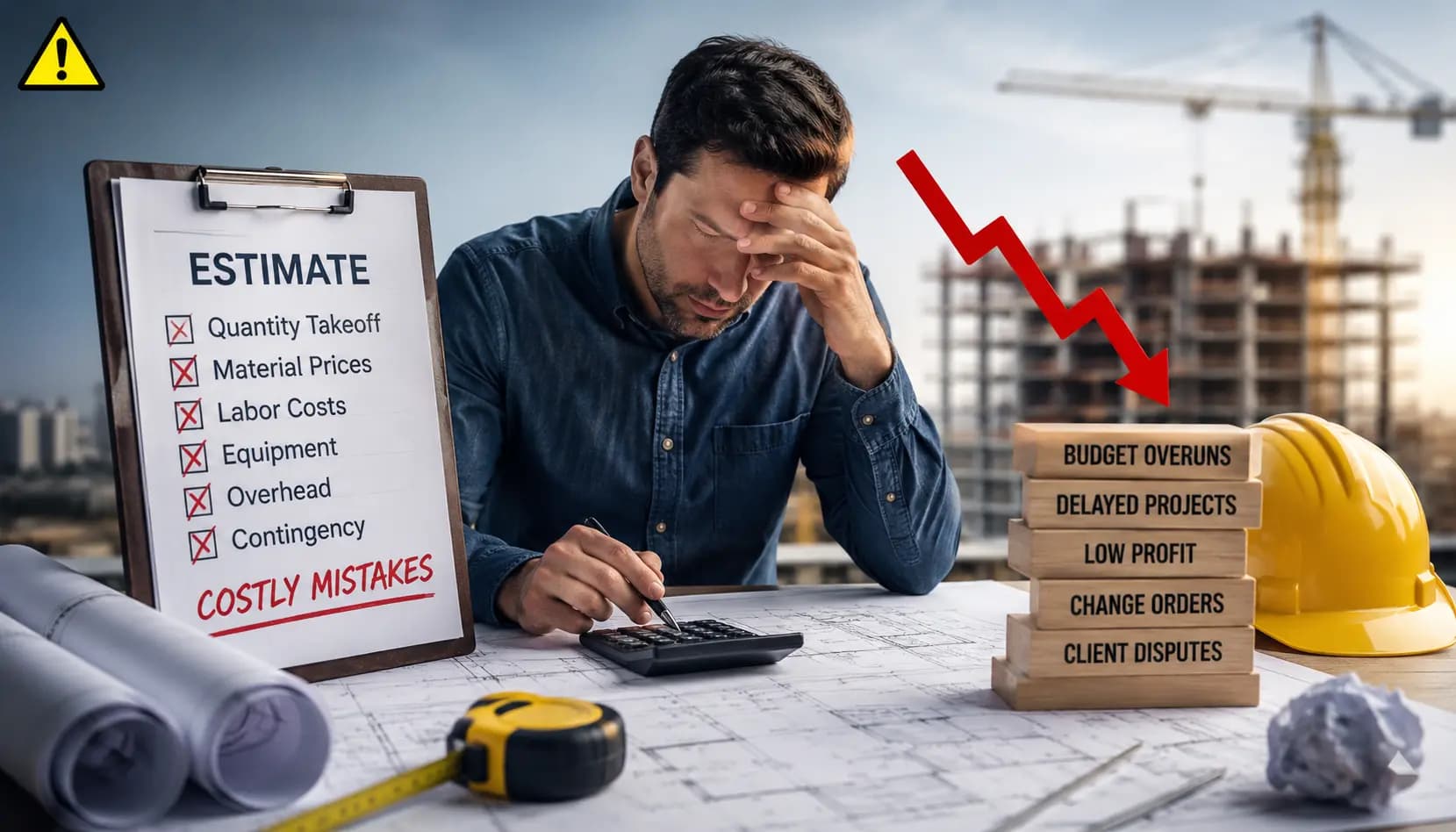

Every successful construction project begins with an accurate estimate. Whether you're bidding on a residential remodel or a large commercial project, your estimate determines profitability, competitiveness, and client trust. Unfortunately, many contractors unknowingly make estimating mistakes that end up costing thousands of dollars. A small oversight during the estimating phase can quickly turn into budget overruns, change orders, delayed schedules, or even financial losses.
Why Accurate Construction Estimating Matters
Construction estimating is much more than calculating material costs. A complete estimate considers:
- Labor expenses
- Material quantities
- Equipment costs
- Subcontractor pricing
- Permit fees
- Project overhead
- Profit margins
- Contingency allowances
Missing even one of these components can significantly reduce your project's profitability. Professional estimators know that the goal isn't simply to win bids, it's to win profitable projects.
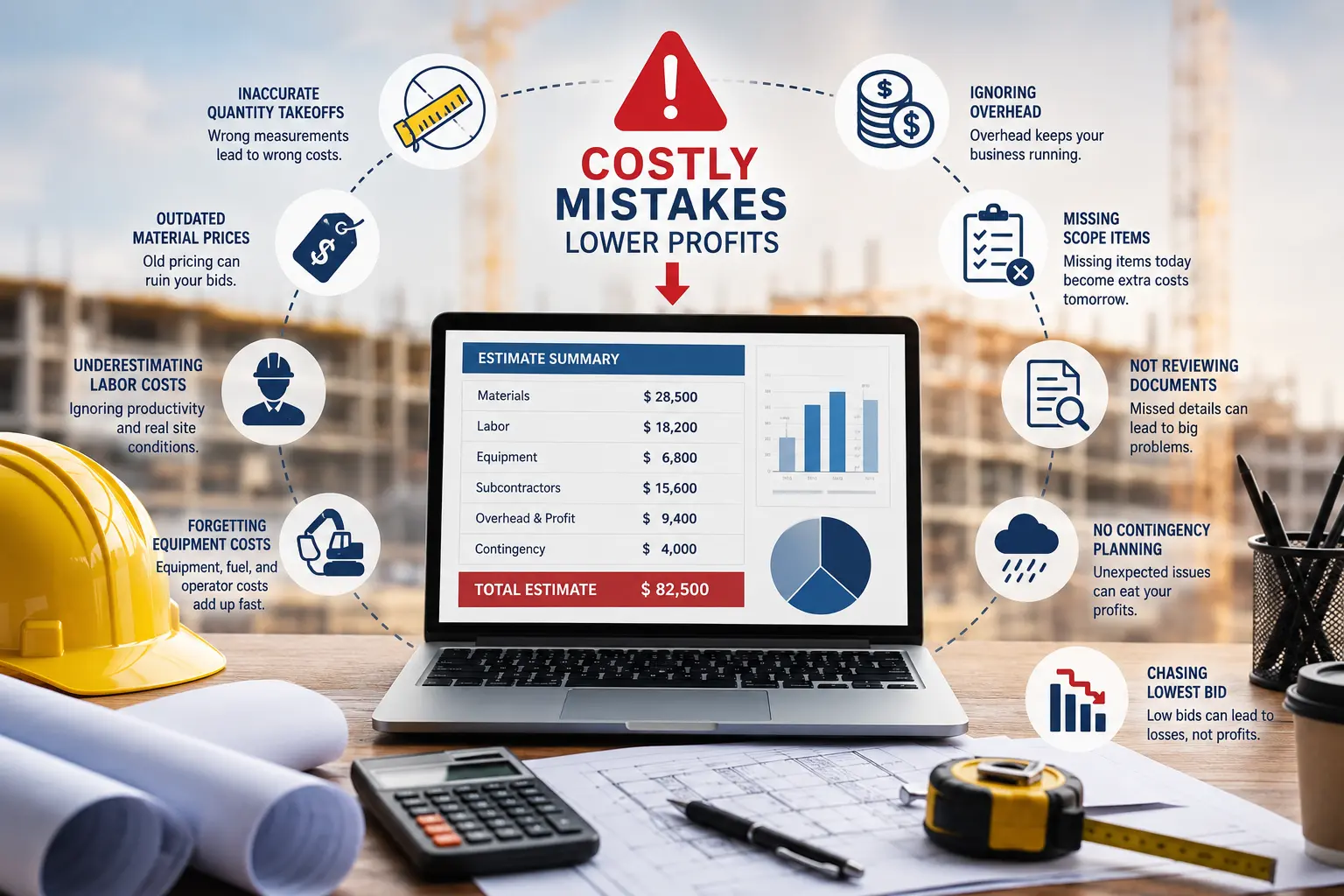
1. Inaccurate Quantity Takeoffs
One of the biggest estimating mistakes is performing an inaccurate quantity takeoff.
If measurements are incorrect, every cost that follows becomes inaccurate.
Common issues include:
- Missing rooms or building sections
- Incorrect measurements
- Duplicate quantities
- Wrong unit conversions
- Outdated plans
Even a 3–5% measurement error can increase project costs by thousands of dollars. How to Avoid It
- Always work from the latest construction drawings.
- Double-check measurements.
- Use professional takeoff software.
- Review calculations before submitting bids.
2. Using Outdated Material Prices
Material prices continue to fluctuate due to:
- Supply chain disruptions
- Seasonal demand
- Inflation
- Fuel costs
- Manufacturer price increases
Many contractors still rely on pricing from previous projects, resulting in underestimated bids.
Best Practice
Always request current supplier quotes before preparing your estimate. Updating pricing shortly before bid submission can significantly improve estimate accuracy.
3. Underestimating Labor Costs
Labor is often the largest expense in construction. Many estimates assume ideal working conditions, but real projects involve:
- Weather delays
- Overtime
- Reduced productivity
- Complex installations
- Crew learning curves
Ignoring these factors can dramatically reduce project profit. Improve Labor Estimates By
- Using historical production rates
- Reviewing similar completed projects
- Including realistic productivity assumptions
- Planning for overtime when necessary
4. Forgetting Equipment Costs
Many contractors include material and labor costs but overlook equipment expenses.
These may include:
- Excavators
- Scissor lifts
- Cranes
- Concrete mixers
- Temporary generators
- Fuel
- Equipment transportation
Equipment costs can quickly become one of the largest project expenses. Always account for rental periods, maintenance, operator costs, and fuel consumption.
5. Ignoring Project Overhead
Project overhead is one of the easiest costs to underestimate. Typical overhead expenses include:
- Office staff
- Insurance
- Software subscriptions
- Vehicles
- Project management
- Administrative costs
- Utilities
- Accounting
Without properly allocating overhead, projects may appear profitable on paper but generate very little actual profit.
6. Missing Scope Items
Scope gaps are among the most expensive estimating mistakes. Examples include:
- Site cleanup
- Demolition
- Temporary fencing
- Disposal fees
- Testing
- Final inspections
- Landscaping restoration
Clients often assume these items are included. If they're missing from your estimate, you'll likely absorb the cost later.
Solution: Create a standardized estimating checklist that covers every project phase before submitting bids.
7. Not Reviewing Bid Documents Carefully
Many contractors rush through bid packages and overlook important requirements. Commonly missed information includes:
- Special specifications
- Alternate bid items
- Required certifications
- Scheduling requirements
- Material substitutions
- Warranty obligations
A missed requirement can make your bid less competitive or create unexpected costs during construction. Always read every specification before beginning the estimate.
8. Forgetting Contingency Costs
Unexpected issues occur on almost every construction project.
These may include:
- Hidden structural damage
- Utility conflicts
- Weather delays
- Material shortages
- Design revisions
Without a contingency allowance, unexpected costs directly reduce profit. Many estimators include a contingency of 5–10%, depending on project complexity and risk.
9. Chasing the Lowest Bid
Winning every bid isn't the goal. Submitting unrealistically low estimates often leads to:
- Reduced profit
- Cash flow problems
- Poor project quality
- Constant change orders
- Client disputes
Instead, focus on delivering accurate, transparent, and competitive estimates that reflect the true project cost. Clients increasingly value reliability over the lowest price.
10. Not Using Modern Estimating Software
Manual spreadsheets still work, but they increase the likelihood of:
- Formula errors
- Duplicate entries
- Missing calculations
- Version control issues
- Human mistakes
Construction estimating software can improve accuracy by automating calculations, organizing project data, and reducing repetitive tasks. Digital estimating also makes it easier to update estimates when project revisions occur.
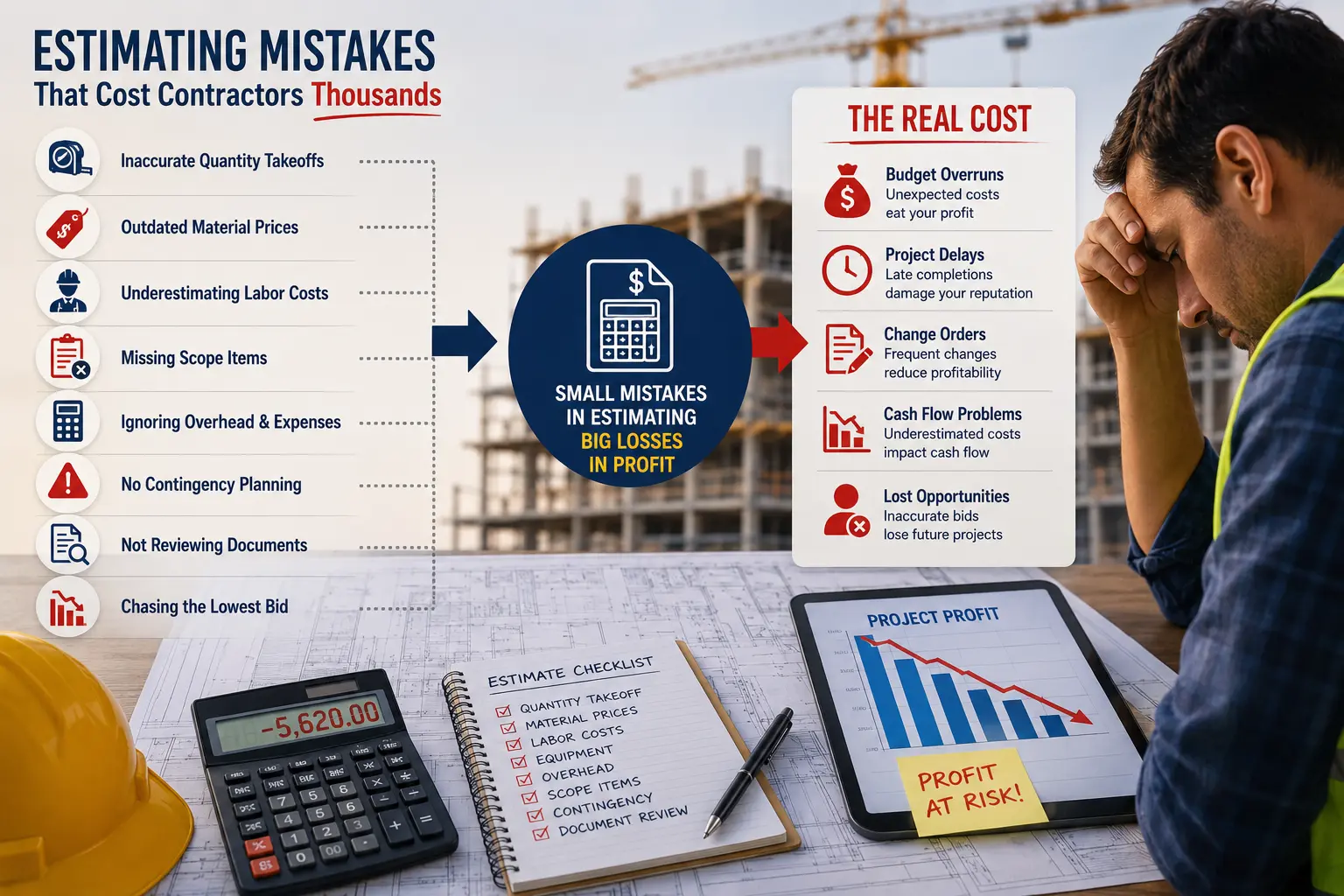
Tips to Improve Construction Estimate Accuracy
Professional estimators consistently follow proven processes. Here are a few best practices:
- Review drawings multiple times before estimating.
- Request updated supplier pricing.
- Use standardized estimating templates.
- Maintain historical cost databases.
- Verify labor production rates.
- Double-check quantity takeoffs.
- Include contingency allowances.
- Perform a final estimate review before submission.
Consistent estimating procedures reduce costly mistakes and improve long-term profitability.
How Professional Estimating Services Help
Many contractors choose to outsource estimating because it saves time while improving bid accuracy. Professional estimating services can provide:
- Detailed quantity takeoffs
- Accurate labor calculations
- Current material pricing
- Comprehensive bid packages
- Faster turnaround times
- Greater confidence during bidding
Whether you're bidding on residential, commercial, or renovation projects, professional estimates help reduce risk and improve profit margins.
Final Thoughts
Construction estimating is one of the most important parts of every successful project. Small mistakes made before construction begins can lead to significant financial losses later. By avoiding common estimating errors such as inaccurate quantity takeoffs, outdated pricing, overlooked overhead, and incomplete project scopes—you can produce more reliable estimates, win better projects, and protect your bottom line.
At BidAccurate, we help contractors prepare detailed, accurate, and dependable construction estimates that support smarter bidding decisions and more profitable projects. Whether you're a general contractor, subcontractor, builder, or developer, investing in better estimating practices today can save thousands of dollars on future projects.
Frequently Asked Questions
What is the most common construction estimating mistake?
The most common mistake is performing inaccurate quantity takeoffs. Even small measurement errors can lead to incorrect material, labor, and equipment costs, reducing project profitability.
How can contractors improve estimate accuracy?
Contractors can improve estimate accuracy by using updated material prices, verifying quantity takeoffs, accounting for labor productivity, including overhead and contingency costs, and reviewing project documents thoroughly before submitting bids.
Why do contractors lose money on projects?
Many contractors lose money because of underestimated labor costs, missing scope items, outdated pricing, and insufficient contingency planning. Accurate estimating helps prevent these costly issues.
Is construction estimating software worth using?
Yes. Modern estimating software reduces manual calculation errors, speeds up the estimating process, improves consistency, and makes it easier to update estimates when project plans change.
Should I include contingency in every estimate?
For most projects, including a contingency allowance is recommended to account for unforeseen conditions such as material price fluctuations, weather delays, or design changes. The appropriate percentage depends on the project's complexity and risk profile.