 8 min read


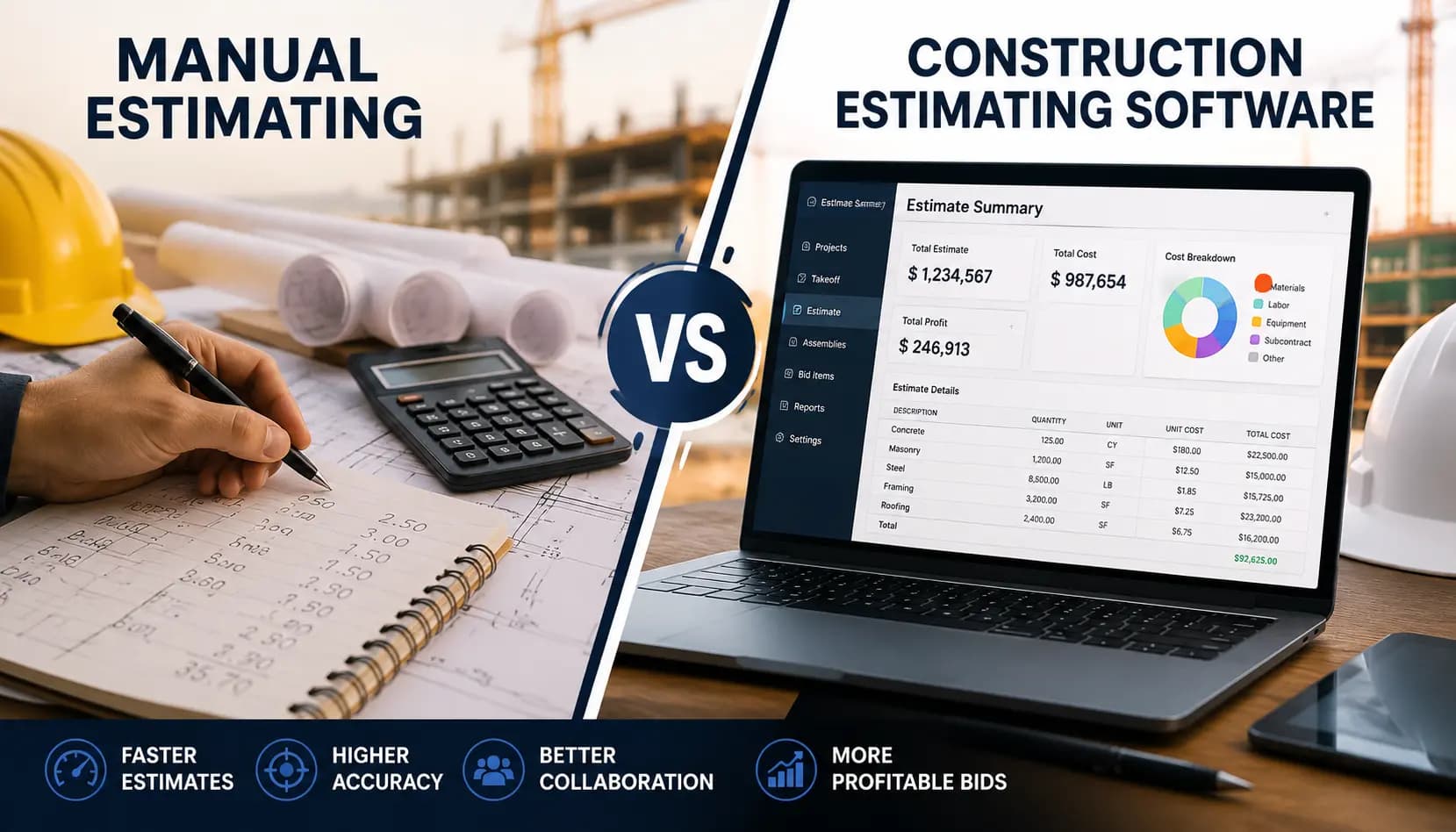

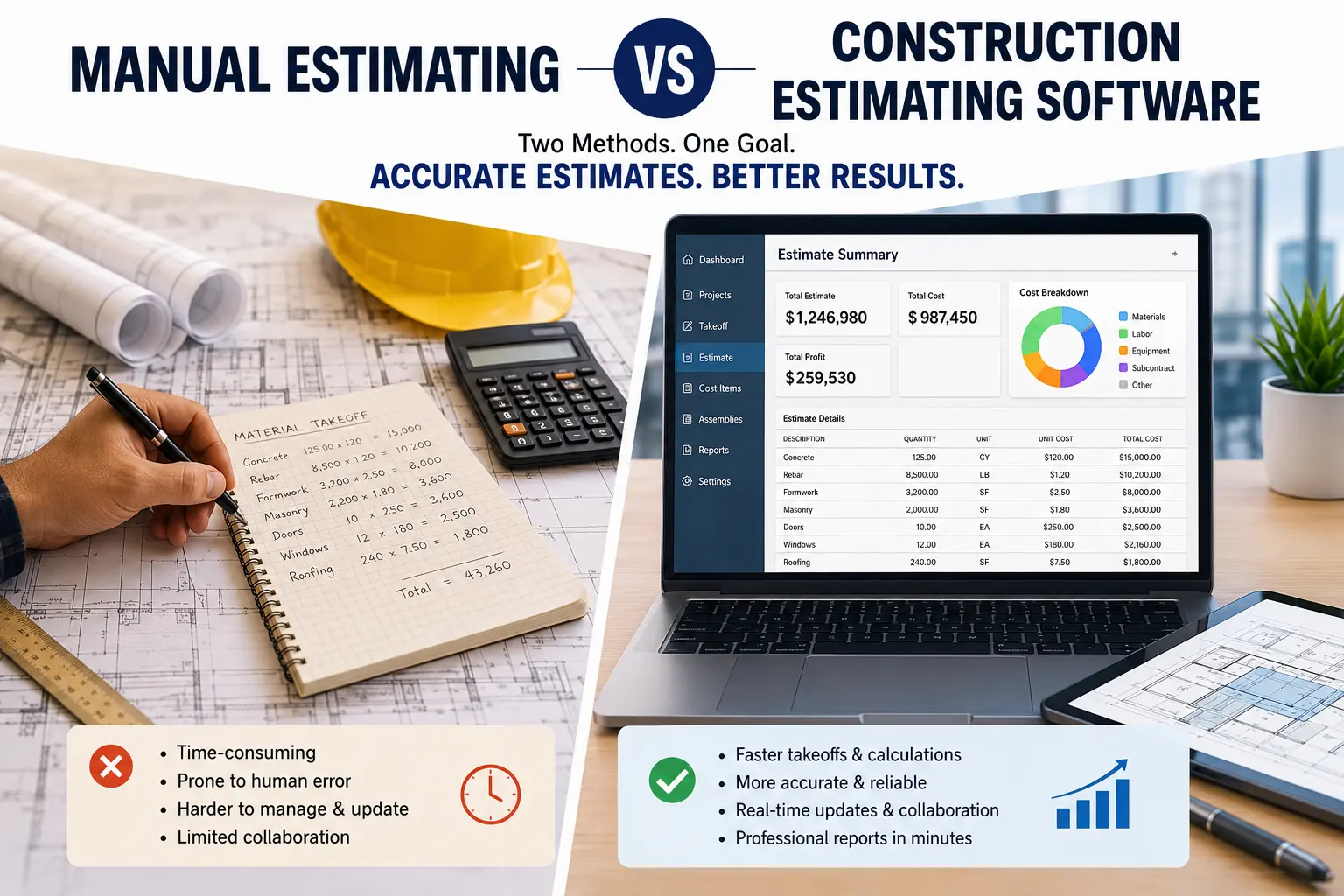
For decades, contractors relied on spreadsheets, calculators, printed blueprints, and handwritten notes to prepare construction estimates. While this traditional process has built countless successful projects, today's competitive construction industry demands greater speed, precision, and efficiency. Construction estimating software has transformed the way contractors prepare bids by automating calculations, organizing material quantities, reducing human error, and improving collaboration. But does that mean manual estimating is obsolete? Not necessarily.
Both methods have advantages and disadvantages depending on the project size, budget, and contractor's workflow. In this guide, we'll compare manual estimating vs construction estimating software so you can determine which approach is best for your business.
What Is Manual Estimating?
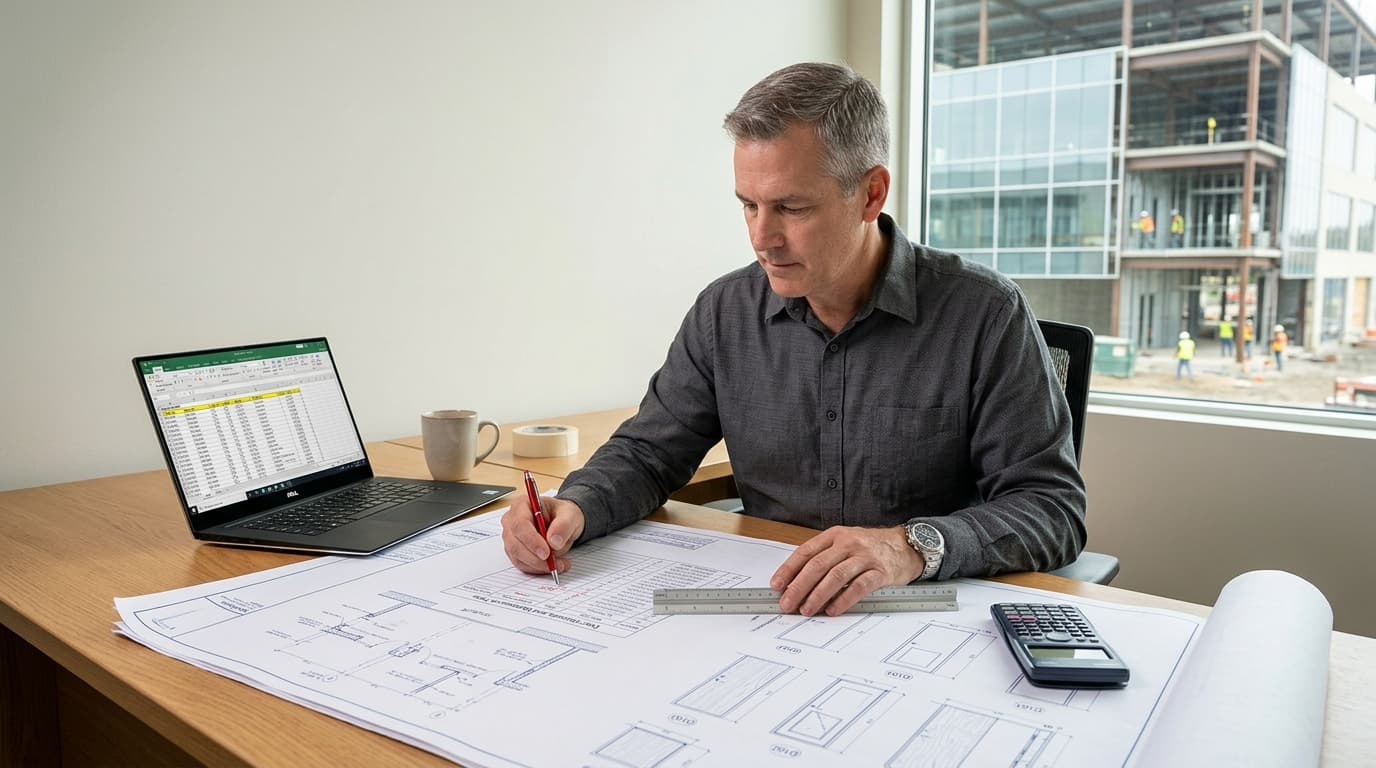
A manual estimate is created using traditional tools such as:
- Printed construction drawings
- Scale rulers
- Calculators
- Excel spreadsheets
- Pen and paper
- Personal experience
The estimator reviews drawings, measures dimensions manually, calculates quantities, applies labor and material costs, and prepares the final bid without specialized estimating software. Many experienced contractors still prefer this approach, especially for small residential projects.
What Is Construction Estimating Software?
Construction estimating software is a digital solution that simplifies and automates the estimating process. Instead of manually measuring drawings and entering calculations, the software allows contractors to:
- Perform digital takeoffs
- Calculate quantities automatically
- Store pricing databases
- Generate professional estimates
- Reuse templates
- Collaborate with teams
- Export reports instantly
Many estimating platforms also integrate with project management, accounting, scheduling, and procurement systems.
Accuracy Comparison
Accuracy is one of the biggest differences between the two methods.
Manual Estimating
Manual calculations increase the chance of mistakes such as:
- Missing materials
- Incorrect measurements
- Formula errors
- Forgotten labor costs
- Duplicate quantities
Even experienced estimators occasionally make costly mistakes when working under tight deadlines.
Construction Estimating Software
Estimating software significantly reduces errors by:
- Automating quantity calculations
- Using predefined formulas
- Detecting missing items
- Maintaining standardized pricing databases
- Updating totals automatically
The result is a more reliable estimate with fewer costly surprises.
Speed Comparison
Construction projects often have tight bidding deadlines.
Manual Estimate
A manual estimate for a medium-sized commercial project may require several days of work. Tasks include:
- Reviewing drawings
- Measuring plans
- Calculating quantities
- Creating spreadsheets
- Double-checking totals
Estimating Software
With estimating software, many of these tasks become automated. Estimators can:
- Import digital plans
- Perform takeoffs in minutes
- Generate material lists instantly
- Update quantities automatically
- Produce professional reports with a few clicks
This allows contractors to bid on more projects without sacrificing quality.
Cost Considerations
Many contractors assume manual estimating is cheaper because there are no software subscription fees. While that's true on the surface, hidden costs often outweigh the savings.
Manual Estimating Costs
Hidden expenses include:
- Lost productivity
- Rework
- Estimating errors
- Missed bid opportunities
- Overtime
- Printing plans
- Spreadsheet maintenance
Estimating Software Costs
Software requires an investment, but it often delivers long-term value by:
- Reducing estimating time
- Improving bid accuracy
- Winning more projects
- Lowering administrative work
- Standardizing estimating processes
For growing contractors, the return on investment is usually substantial.
Collaboration and Teamwork
Modern construction projects involve multiple stakeholders. Manual estimating often makes collaboration difficult because files may exist across paper documents, emails, or individual spreadsheets. Estimating software enables teams to:
- Share estimates instantly
- Work from cloud-based systems
- Track revisions
- Manage version history
- Review changes in real time
This improves communication and reduces confusion during the bidding process.
Flexibility for Different Project Sizes
Manual Estimating Works Well For
- Small renovations
- Home repairs
- Simple residential jobs
- One-person contractors
- Projects with limited drawings
Estimating Software Excels At
- Commercial buildings
- Multi-family housing
- Large residential developments
- Government projects
- Industrial construction
- Projects with multiple revisions
As project complexity increases, estimating software becomes increasingly valuable.
Learning Curve
One reason some contractors hesitate to adopt estimating software is the learning curve.
Manual estimating relies heavily on personal experience and familiar tools like spreadsheets.
Software requires initial training, but most modern platforms feature intuitive interfaces, templates, and automation that help users become productive quickly. After the learning period, most estimators complete projects much faster than with manual methods.
Which Method Produces Better Bids?
Winning bids are not always the lowest bids—they are the most accurate and profitable. Manual estimates can produce excellent results when prepared by experienced estimators with sufficient time.
However, estimating software offers several advantages:
- Faster bid preparation
- More consistent pricing
- Professional proposal formatting
- Better documentation
- Easier revisions
- Reduced risk of overlooked costs
These advantages help contractors respond to more opportunities while maintaining healthy profit margins.
Can You Combine Both Methods?
Absolutely. Many successful contractors use a hybrid approach. For example:
- Perform a digital quantity takeoff using estimating software.
- Review quantities manually for quality assurance.
- Adjust labor rates based on local market conditions.
- Add project-specific contingencies.
- Finalize pricing using professional judgment.
This combination delivers both speed and experience-driven accuracy.
Which Option Is Right for Your Business?
Choose manual estimating if you:
- Primarily handle small residential projects.
- Prepare only a few estimates each month.
- Prefer traditional workflows.
- Have limited software needs.
Choose construction estimating software if you:
- Bid on projects regularly.
- Manage commercial or complex jobs.
- Need faster turnaround times.
- Want to reduce costly estimating mistakes.
- Plan to scale your business.
- Collaborate with multiple estimators or project managers.
As your business grows, investing in estimating software can become a competitive advantage rather than just another business expense.
Final Thoughts
Manual estimating has served the construction industry well for generations, and it remains a practical option for smaller, less complex projects. However, as competition increases and project timelines become tighter, relying solely on manual methods can limit efficiency and increase the risk of errors. Construction estimating software offers significant benefits, including faster takeoffs, improved accuracy, streamlined collaboration, and professional reporting. For contractors looking to grow, bid on more projects, and protect their profit margins, adopting estimating software is often a worthwhile investment.
Ultimately, the best approach depends on your business size, project complexity, and long-term goals. Many successful contractors find that combining the precision of software with the expertise of experienced estimators delivers the strongest results.
Frequently Asked Questions
Is manual estimating still used in construction?
Yes. Many small contractors and residential builders continue to use manual estimating, especially for straightforward projects where digital tools may not be necessary.
Is estimating software worth the investment?
For contractors who prepare estimates frequently or work on larger projects, estimating software often pays for itself through improved accuracy, faster bid preparation, and increased productivity.
Can estimating software replace experienced estimators?
No. Software is a tool that enhances efficiency, but experienced estimators are still essential for interpreting project requirements, assessing risks, and making informed pricing decisions.
Which is more accurate: manual estimating or estimating software?
Estimating software generally provides greater accuracy because it automates calculations, minimizes human error, and maintains consistent pricing data. However, the best results come from combining software with professional expertise.