 6 min read


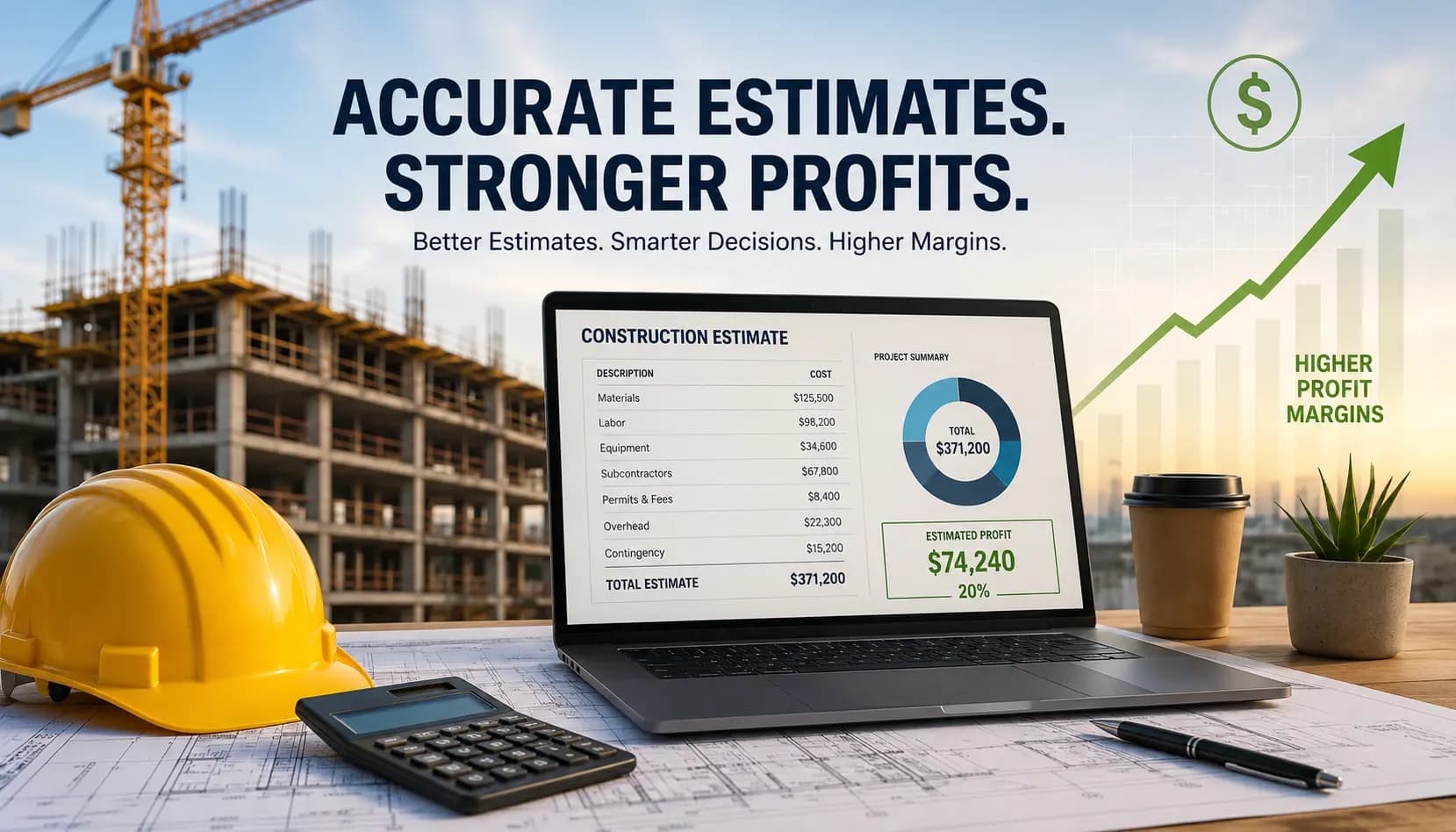

Every construction company wants to increase profitability, but many contractors focus only on winning more projects. In reality, long-term profitability starts much earlier during the estimating process. A well-prepared construction estimate is more than just a number submitted with a bid. It forms the financial foundation of the entire project. Even a small error in material quantities, labor calculations, equipment costs, or subcontractor pricing can significantly reduce profit margins or even turn a profitable project into a financial loss.
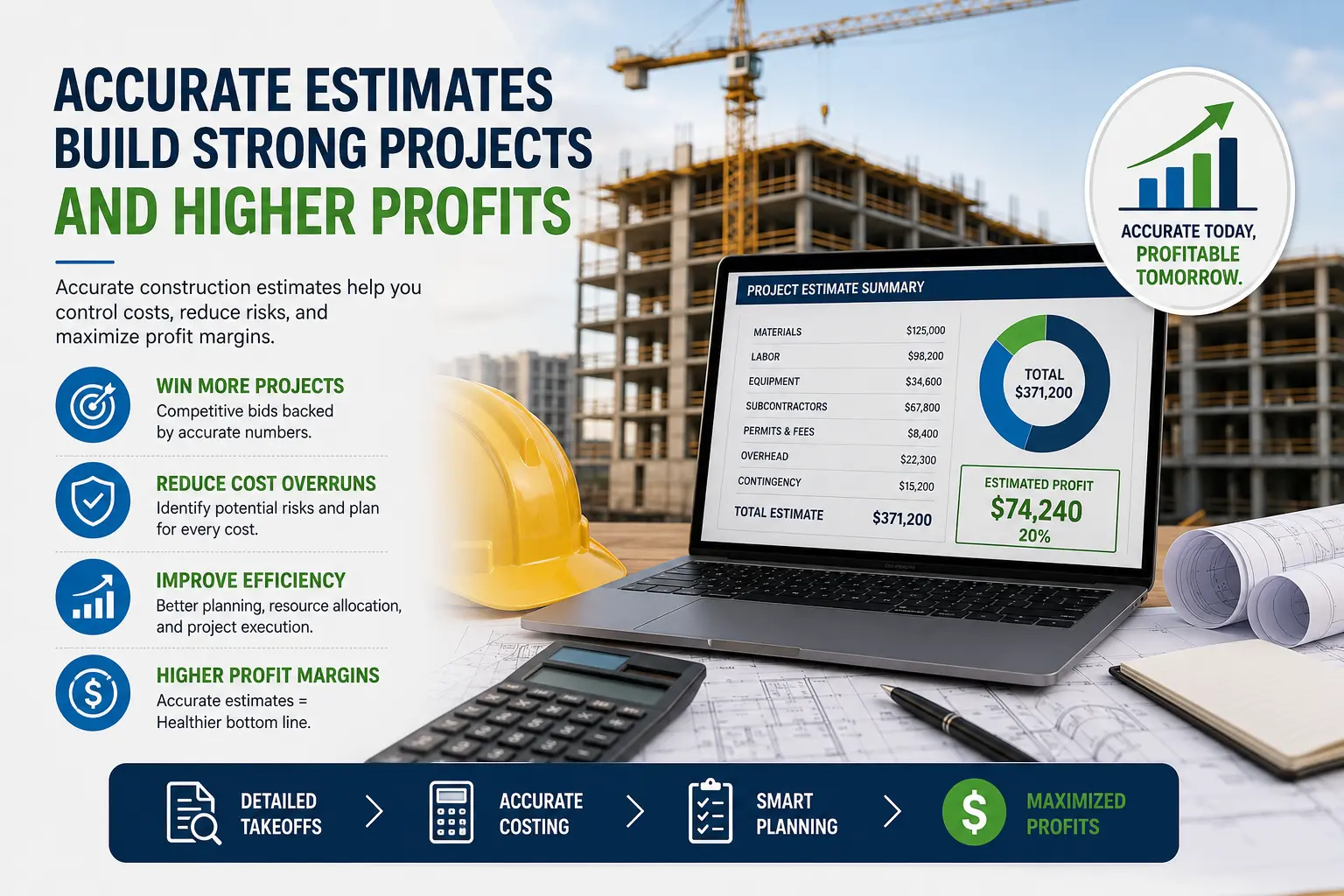
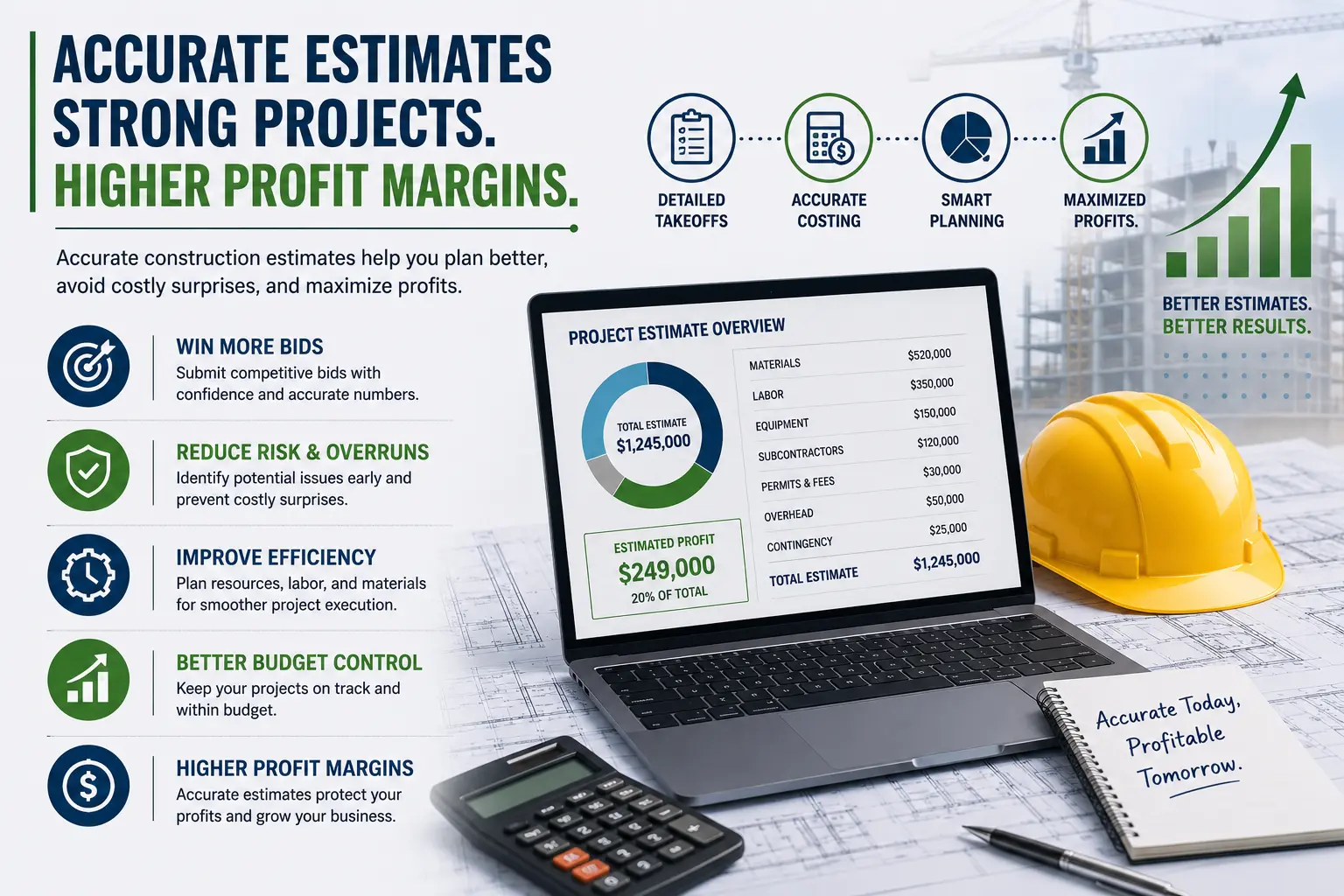
Accurate construction estimates allow contractors to bid competitively while maintaining healthy margins. They improve budgeting, reduce risks, prevent change-order disputes, and provide greater confidence throughout project execution.
Why Construction Estimates Matter
A construction estimate predicts the total cost required to complete a project. It includes:
- Material costs
- Labor expenses
- Equipment rental
- Subcontractor pricing
- Permits and inspections
- Overhead expenses
- Contingency allowances
- Desired profit margin
Every project decision from bidding to procurement depends on these numbers. When estimates are inaccurate, every stage of the project becomes more difficult to manage.
The Hidden Cost of Poor Estimates
Many contractors believe losing profit happens on the job site. In reality, profit is often lost before construction even begins. Common estimating mistakes include:
- Missing materials
- Incorrect quantity takeoffs
- Underestimating labor hours
- Ignoring equipment costs
- Using outdated supplier pricing
- Forgetting overhead expenses
- Poor subcontractor pricing
- No contingency allowance
Each of these mistakes slowly reduces the project's profitability. For example, forgetting just 5% of the required drywall material on a large commercial project could cost thousands of dollars that were never included in the bid.
How Accurate Estimates Improve Profit Margins
1. Prevent Underbidding
Underbidding is one of the fastest ways to lose money. When contractors submit bids below the actual project cost, they may win the project but completing it becomes financially challenging. Accurate estimating ensures every project cost is accounted for before the proposal is submitted. Instead of guessing, contractors know exactly how much the project will cost and what profit they expect to earn.
2. Better Material Cost Planning
Material prices fluctuate frequently. Steel, lumber, concrete, insulation, and electrical supplies rarely remain at the same price for long. Professional estimates use updated pricing databases and supplier quotes, helping contractors:
- Avoid unexpected price increases
- Order correct quantities
- Reduce waste
- Minimize emergency purchases
Ordering the right amount of material prevents unnecessary spending and improves project profitability.
3. More Accurate Labor Calculations
Labor is often the largest project expense. Estimating too few labor hours leads to:
- Overtime costs
- Schedule delays
- Reduced productivity
- Lower profit margins
Accurate labor estimation considers:
- Crew size
- Productivity rates
- Project complexity
- Site conditions
- Weather impacts
- Trade coordination
Proper labor planning keeps projects on schedule while controlling payroll costs.
4. Stronger Bid Confidence
Many contractors lower their prices simply because they aren't confident in their estimate. This often results in:
- Smaller profit margins
- Price wars
- Financial risk
Accurate estimates provide confidence during bidding. Instead of competing solely on price, contractors can submit realistic proposals backed by reliable cost data. This creates sustainable profitability over time.
5. Reduced Cost Overruns
Cost overruns happen when actual project expenses exceed the estimated budget. The most common causes include:
- Missing scope items
- Quantity errors
- Unexpected labor costs
- Material waste
- Poor scheduling
Detailed estimating identifies potential risks early and includes appropriate contingencies.
Fewer surprises during construction mean more predictable profits.
Better Cash Flow Management
Accurate estimates also improve financial planning. Contractors can forecast:
- Monthly expenses
- Material purchases
- Payroll requirements
- Equipment rentals
- Subcontractor payments
Knowing when money will be spent allows companies to manage working capital more effectively. Healthy cash flow reduces financial stress and supports long-term business growth.
Improved Client Trust
Clients appreciate transparency. When contractors provide detailed estimates with clearly defined scopes of work, customers gain confidence in the proposal. Benefits include:
- Fewer disputes
- Better communication
- Easier change-order management
- Stronger client relationships
- More repeat business
Satisfied clients often become valuable referral sources, creating additional revenue opportunities.
Fewer Change Orders
Not every change order is avoidable, but many occur because important project items were missed during estimating. A comprehensive estimate minimizes:
- Scope misunderstandings
- Quantity discrepancies
- Missing materials
- Labor adjustments
When the original estimate is thorough, change orders become strategic project decisions rather than corrections for estimating mistakes.
Better Resource Allocation
Accurate estimates help project managers allocate resources efficiently. They can schedule:
- Labor crews
- Equipment
- Material deliveries
- Subcontractors
This reduces downtime and improves overall project efficiency. Efficient operations translate directly into higher profit margins.
Technology Makes Estimating More Accurate
Modern construction estimating software has dramatically improved estimating accuracy. Today's estimating tools help contractors:
- Automate quantity takeoffs
- Store pricing databases
- Generate detailed reports
- Reduce manual calculations
- Improve bid consistency
- Track historical project costs
Rather than relying on spreadsheets alone, digital estimating solutions reduce human error while increasing productivity. Professional estimating services combine experienced estimators with advanced software to deliver reliable, data-driven cost estimates.
The Long-Term Financial Benefits
Accurate construction estimating provides benefits far beyond a single project. Companies that consistently produce reliable estimates often experience:
- Higher average profit margins
- More successful bids
- Better project planning
- Improved budgeting
- Stronger client relationships
- Greater financial stability
- Increased business growth
Over time, even small improvements in estimating accuracy can significantly increase annual profits.
Best Practices for Accurate Construction Estimates
To maximize profitability, contractors should follow these best practices:
Perform Detailed Quantity Takeoffs
Accurate material quantities create the foundation for reliable estimates.
Keep Cost Databases Updated
Regularly update material prices, labor rates, and equipment costs.
Review Historical Projects
Past project data provides valuable insight into actual production costs.
Include Contingency Allowances
Unexpected issues happen on every project.
Reasonable contingency planning protects profit margins.
Double-Check Every Estimate
A second review often identifies missing scope items or calculation errors.
Use Professional Estimating Software
Modern estimating platforms improve speed, consistency, and overall accuracy.
Consider Professional Estimating Services
For large or complex projects, outsourcing estimates to experienced professionals can improve bid quality while saving valuable time.
Conclusion
Profitability in construction begins long before the first piece of equipment arrives on site. It starts with a precise, comprehensive construction estimate. Accurate construction estimates reduce financial uncertainty, improve bidding confidence, control project costs, and help contractors deliver successful projects without sacrificing profit margins.Whether you're a general contractor, subcontractor, builder, or developer, investing in accurate estimating is one of the smartest business decisions you can make. Better estimates lead to better planning, stronger client relationships, and healthier financial performance on every project.
At BidAccurate, we help contractors prepare reliable, detailed construction estimates that support confident bidding and sustainable growth. By combining experienced estimators with modern estimating technology, we enable construction professionals to win more profitable projects while minimizing costly surprises.
Frequently Asked Questions
1. Why are accurate construction estimates important?
Accurate construction estimates help contractors budget correctly, submit competitive bids, reduce cost overruns, and protect project profit margins.
2. How do inaccurate estimates reduce profits?
Missing materials, underestimated labor, outdated pricing, and overlooked overhead costs can lead to unexpected expenses that reduce or eliminate project profits.
3. Can construction estimating software improve profitability?
Yes. Estimating software reduces manual errors, speeds up quantity takeoffs, maintains updated pricing databases, and improves bid consistency.
4. How often should contractors update estimating costs?
Material prices and labor rates should be reviewed regularly, ideally before preparing each estimate, to ensure pricing reflects current market conditions.
5. Is outsourcing construction estimating worth it?
For many contractors, outsourcing estimating saves time, improves bid accuracy, and allows internal teams to focus on project execution and business development.