 5 min read



When preparing for a construction project, one of the first questions contractors, builders, homeowners, and developers ask is:
"How long does a construction estimate take?"
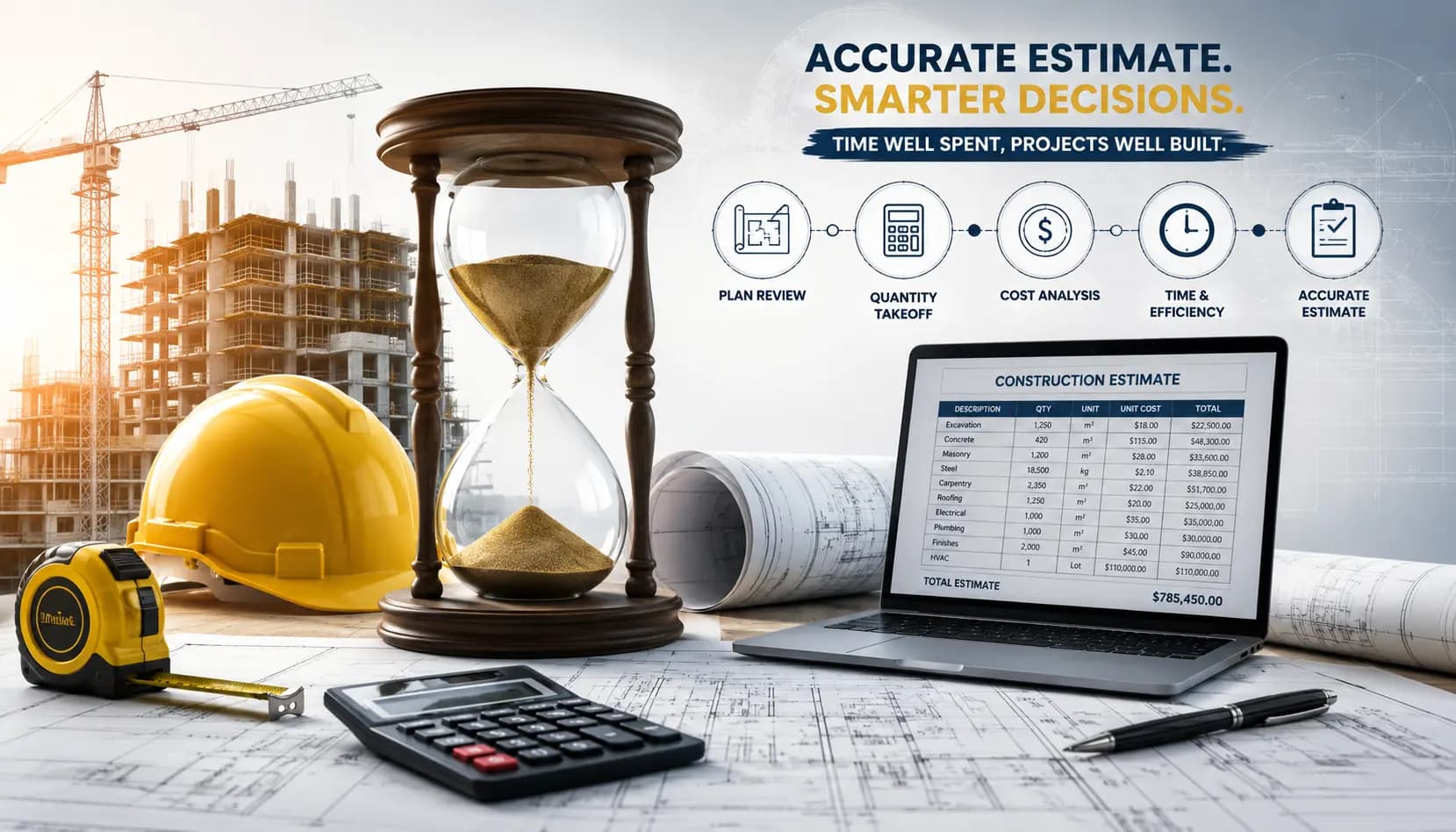
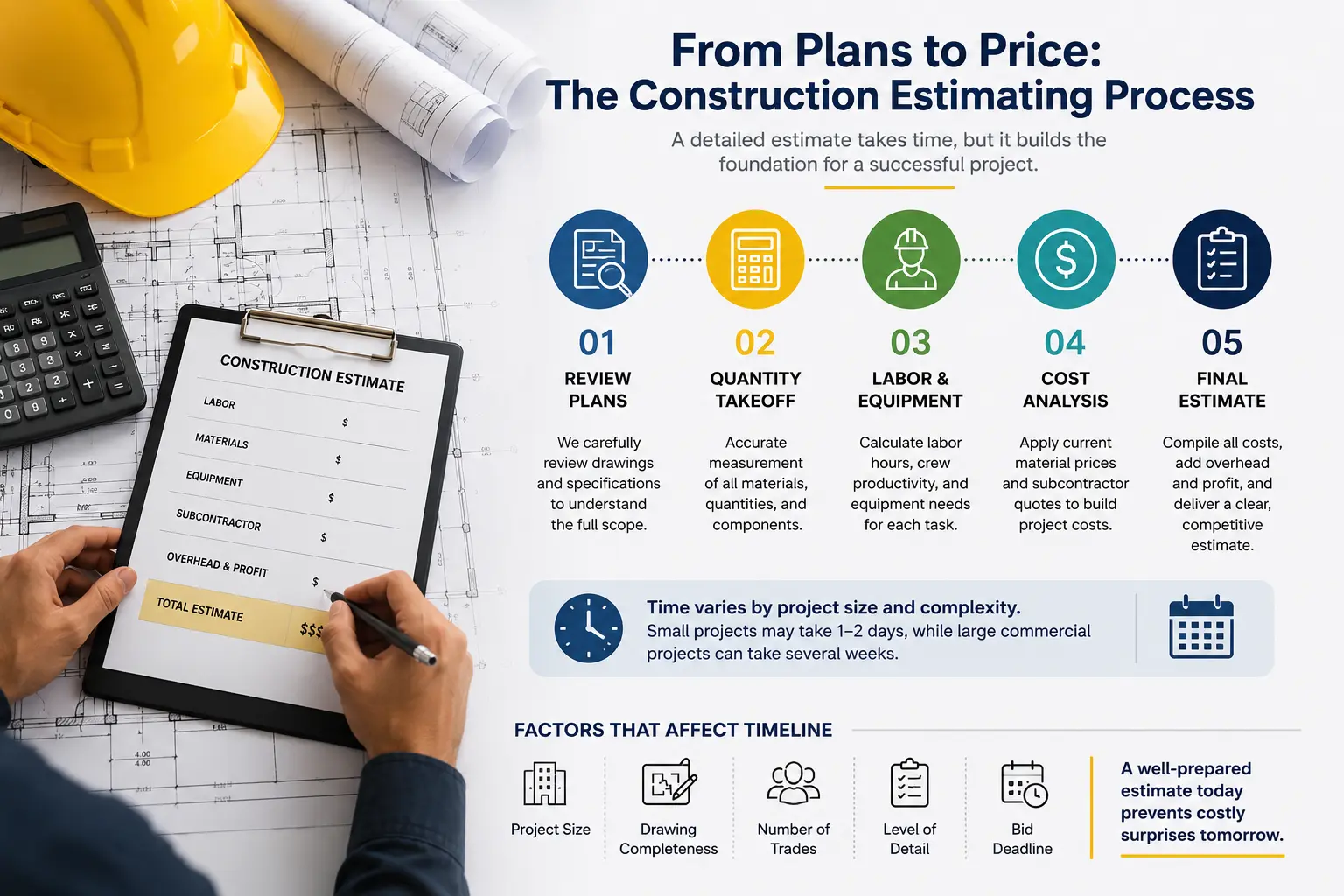
The answer depends on several factors, including project size, design complexity, available drawings, and the level of detail required. While a small residential renovation may only require a day or two, a large commercial building can take several weeks to estimate accurately. A well-prepared estimate is more than just assigning prices to materials. It involves reviewing plans, performing quantity takeoffs, calculating labor, evaluating equipment requirements, considering subcontractor pricing, accounting for overhead, and preparing a competitive proposal.
Why Construction Estimates Take Time
Many people assume estimating simply means adding material costs together. In reality, professional estimating involves careful planning and analysis.
A quality estimate typically includes:
- Reviewing architectural and structural drawings
- Performing quantity takeoffs
- Calculating labor hours
- Pricing materials
- Evaluating equipment requirements
- Collecting subcontractor quotations
- Applying overhead and profit margins
- Reviewing project risks
- Preparing the final bid proposal
Each of these steps requires accuracy because even small mistakes can significantly affect project profitability.
Factors That Affect Construction Estimate Duration
Several variables determine how long estimating will take.
1. Project Size
Larger projects naturally require more work. A kitchen remodel might include only a few hundred measurable items, while a hospital project can involve tens of thousands of quantities across multiple trades. More scope means more estimating hours.
2. Drawing Completeness
Incomplete plans slow the estimating process. Missing elevations, structural details, finish schedules, or specifications often require assumptions or Requests for Information (RFIs), delaying the final estimate. The more complete the drawings, the faster an accurate estimate can be prepared.
3. Number of Construction Trades
Estimating a simple concrete slab is much faster than pricing:
- Earthwork
- Concrete
- Masonry
- Structural Steel
- Carpentry
- Roofing
- Electrical
- Plumbing
- HVAC
- Fire Protection
- Finishes
Each additional trade requires its own quantity takeoff and pricing.
4. Level of Detail Required
Some clients only need a rough budget estimate. Others require:
- Detailed quantity takeoffs
- Material breakdowns
- Labor analysis
- Equipment costs
- Unit pricing
- Bid-ready reports
Detailed estimates naturally require more time but deliver greater accuracy.
5. Bid Deadline
Many contractors face tight bidding schedules. When deadlines are short, experienced estimating firms often assign multiple estimators to different trades simultaneously, allowing estimates to be completed much faster without sacrificing quality.
Typical Construction Estimating Process
Professional estimators generally follow a structured workflow.
Step 1: Review Project Documents
The estimator studies:
- Architectural drawings
- Structural plans
- MEP drawings
- Specifications
- Bid instructions
This ensures every project requirement is understood before quantities are measured.
Step 2: Quantity Takeoff
Every measurable component is calculated, including:
- Concrete
- Rebar
- Lumber
- Drywall
- Flooring
- Roofing
- Doors
- Windows
- Paint
- Fixtures
Accurate takeoffs are the foundation of every reliable estimate.
Step 3: Material Pricing
Current market pricing is applied to all required materials. Professional estimators also account for:
- Supplier pricing
- Waste factors
- Shipping costs
- Regional price differences
Step 4: Labor Calculations
Labor often represents one of the largest project costs. Estimators calculate:
- Crew sizes
- Productivity rates
- Working hours
- Labor burden
- Overtime if required
Step 5: Final Cost Analysis
Finally, estimators add:
- Equipment costs
- Subcontractor quotations
- General conditions
- Overhead
- Profit margin
- Contingencies (when appropriate)
The result is a complete construction estimate ready for bidding.
Can Construction Estimates Be Completed Faster?
Yes, but speed should never come at the expense of accuracy. Professional estimating companies use specialized software, cost databases, and standardized workflows to reduce turnaround time while maintaining precision.
Instead of spending a week measuring plans manually, digital takeoff tools allow estimators to complete quantity calculations much more efficiently. This enables contractors to bid on more projects without overwhelming their internal teams.
Why Accurate Estimates Matter More Than Fast Estimates
Winning a project with an inaccurate estimate can be far more expensive than spending an extra day preparing it properly. Poor estimates often lead to:
- Budget overruns
- Reduced profit margins
- Material shortages
- Change orders
- Scheduling delays
- Client disputes
A well-prepared estimate helps contractors confidently price projects while protecting profitability throughout construction.
When Should You Hire a Professional Estimating Service?
Professional estimating services are especially valuable when:
- Bid deadlines are approaching quickly.
- Your estimating team is overloaded.
- You're bidding multiple projects simultaneously.
- Projects involve complex commercial work.
- You need independent quantity takeoffs.
- You're entering a new market or trade.
Outsourcing estimating allows contractors to focus on project execution while experienced professionals prepare accurate, competitive bids.
Tips to Speed Up the Estimating Process
Whether you're preparing estimates in-house or working with an estimating company, these practices can help reduce turnaround time:
- Provide complete drawings and specifications.
- Include all addenda before estimating begins.
- Clearly define project scope.
- Share bid deadlines early.
- Organize project documents into labeled folders.
- Respond quickly to clarification requests.
- Work with experienced estimators familiar with your project type.
Good preparation can often reduce estimating time by several days.
Final Thoughts
So, how long does a construction estimate take?
For most residential projects, estimates can be completed within 1 to 5 days, while medium and large commercial projects typically require one to four weeks, depending on complexity.
The timeline ultimately depends on project size, document quality, required level of detail, and available estimating resources.
While everyone wants estimates delivered quickly, accuracy should always remain the priority. A carefully prepared estimate not only increases your chances of winning bids but also protects your profit margins throughout construction. Whether you're a homeowner planning a renovation or a contractor pursuing your next commercial project, investing in a detailed, professional construction estimate is one of the smartest decisions you can make.
Frequently Asked Questions
1: How long does a residential construction estimate take?
Most residential construction estimates take between 1 and 5 business days, depending on project size and the completeness of the plans.
2: How long does a commercial construction estimate take?
Commercial estimates typically require 1 to 4 weeks, especially for large or multi-trade projects that involve extensive quantity takeoffs and subcontractor pricing.
3: What causes delays in construction estimating?
Incomplete drawings, missing specifications, frequent design revisions, tight bid deadlines, and complex project scopes are the most common causes of estimating delays.
4: Can estimating software reduce turnaround time?
Yes. Modern estimating software and digital takeoff tools help estimators measure quantities faster, improve accuracy, and complete estimates more efficiently than manual methods.
5: Is it worth outsourcing construction estimating?
Yes. Outsourcing is beneficial for contractors with limited estimating capacity, tight bid schedules, or complex projects, allowing them to submit more accurate bids while focusing on project execution.